
Last updated November 14, 2026
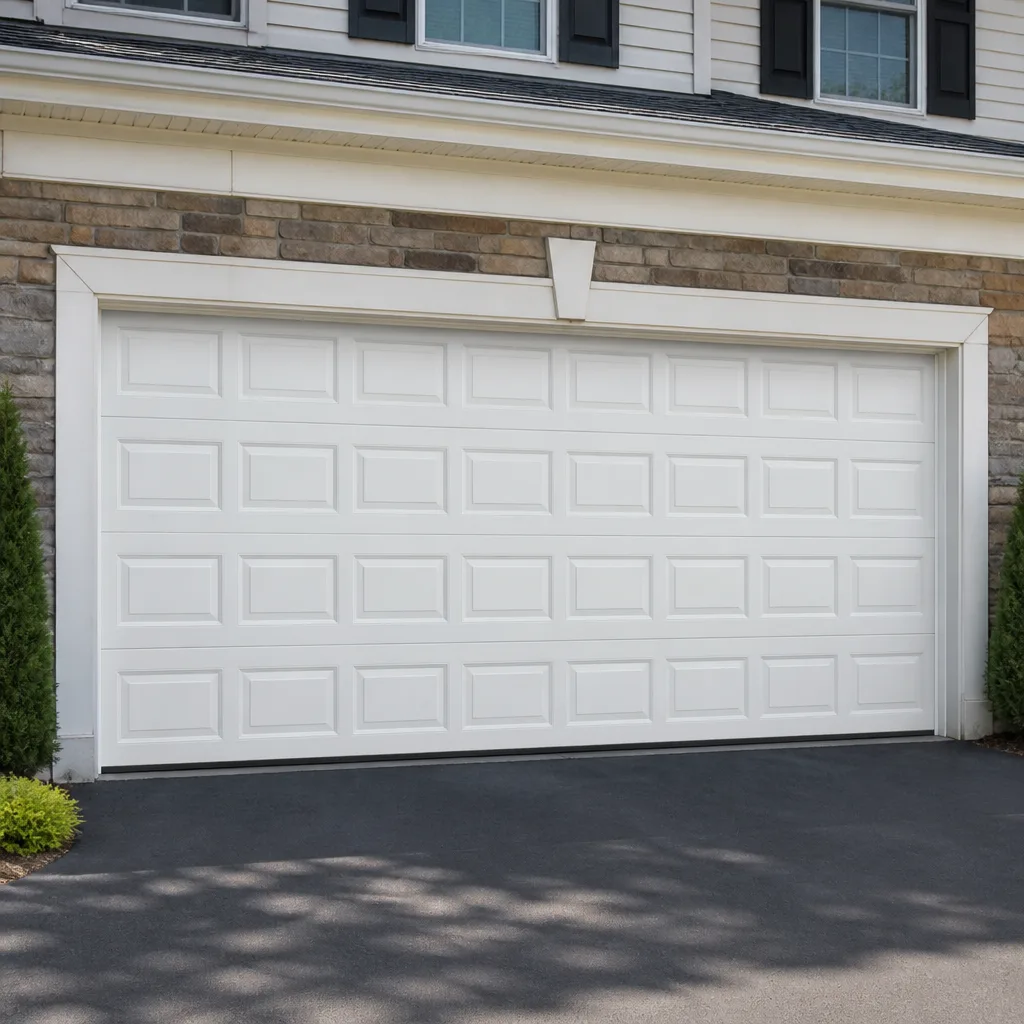 Raised-panel steel
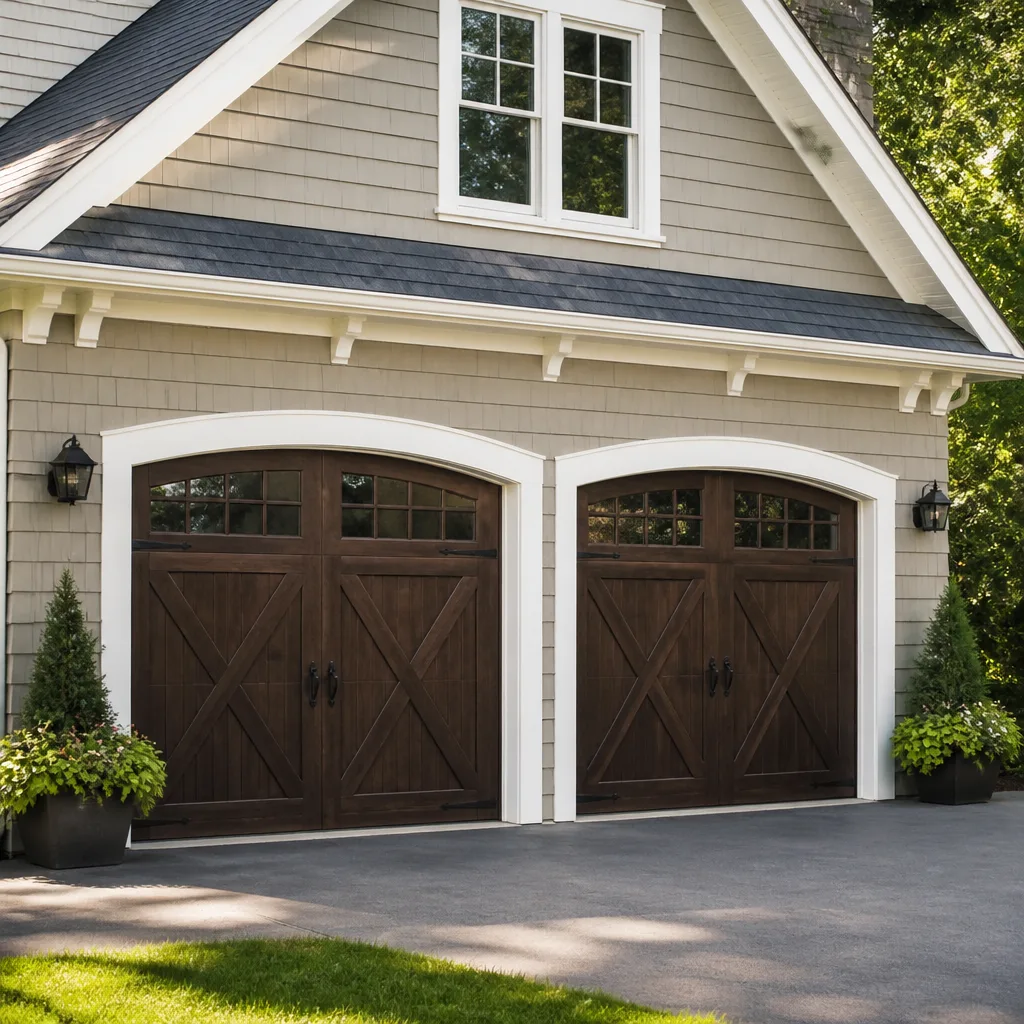 Carriage house
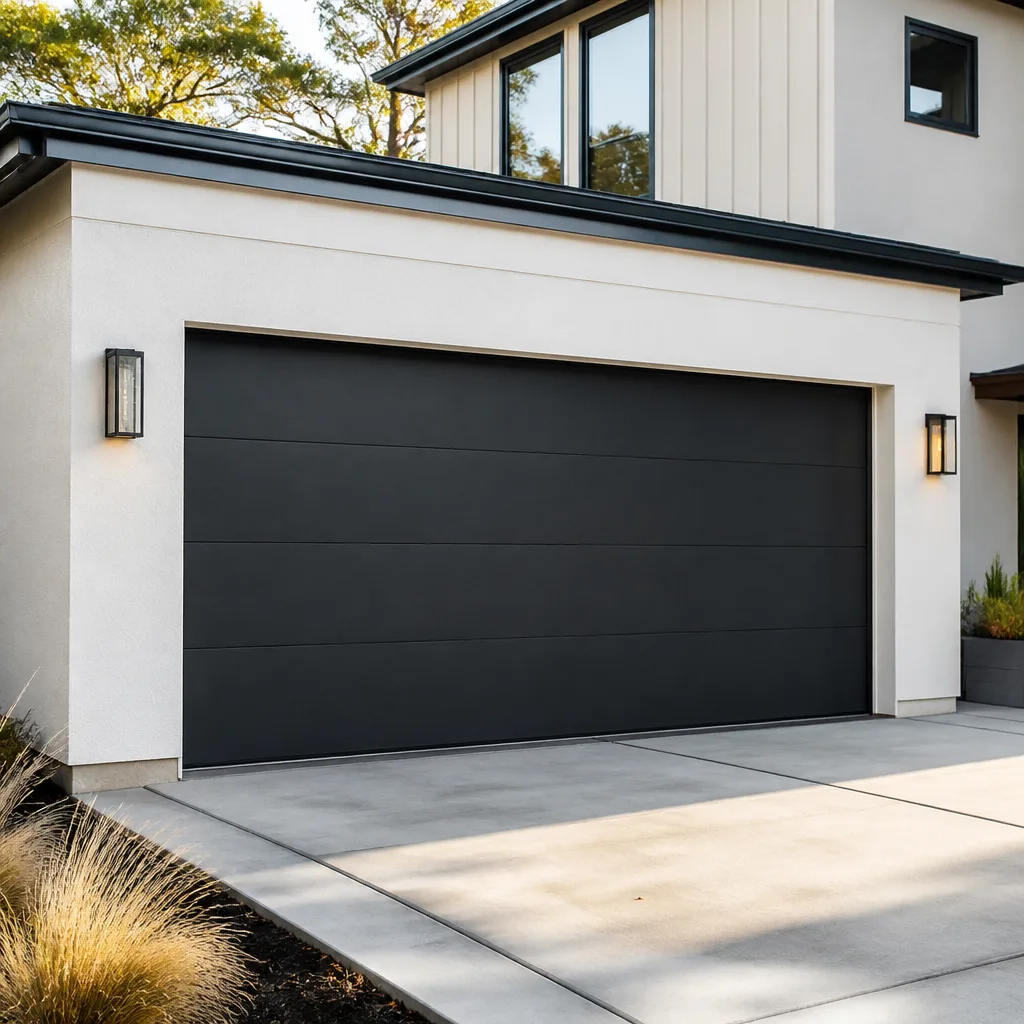 Modern flush
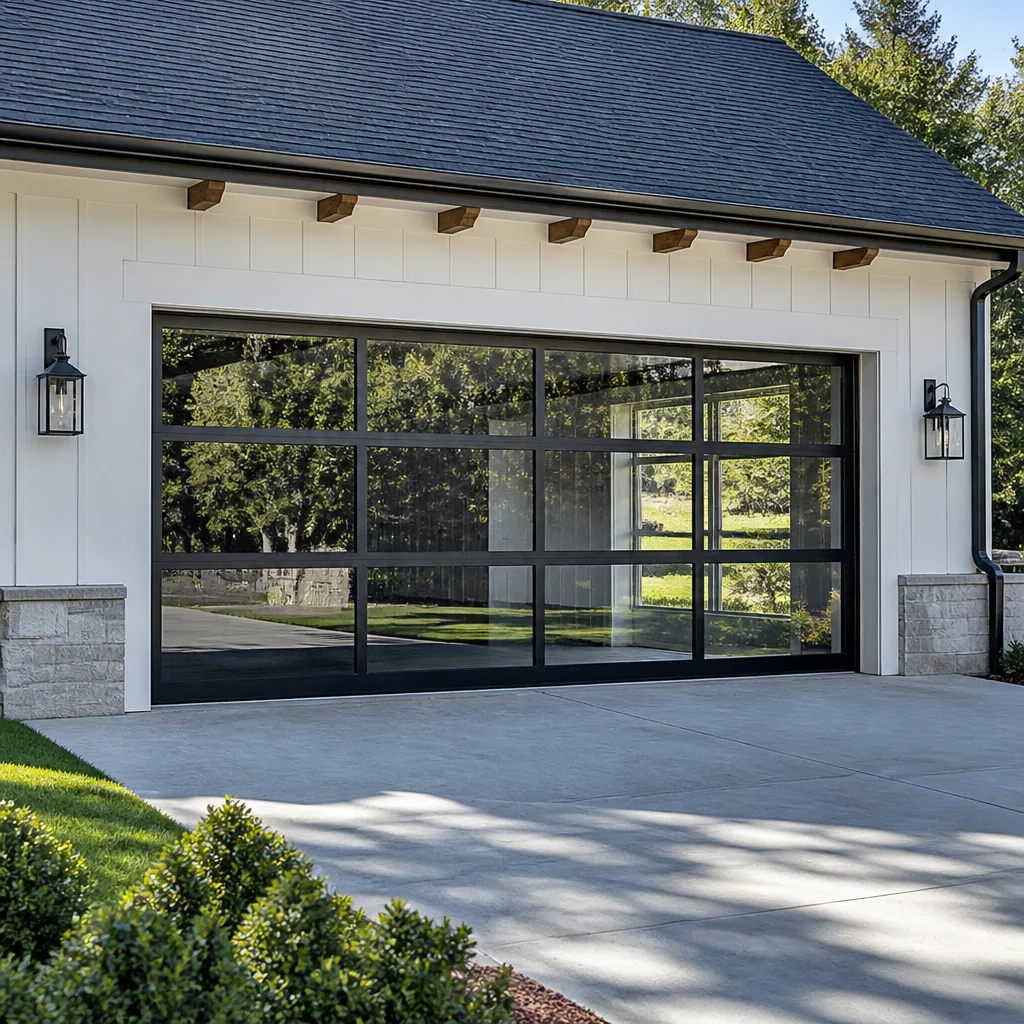 Full-view glass
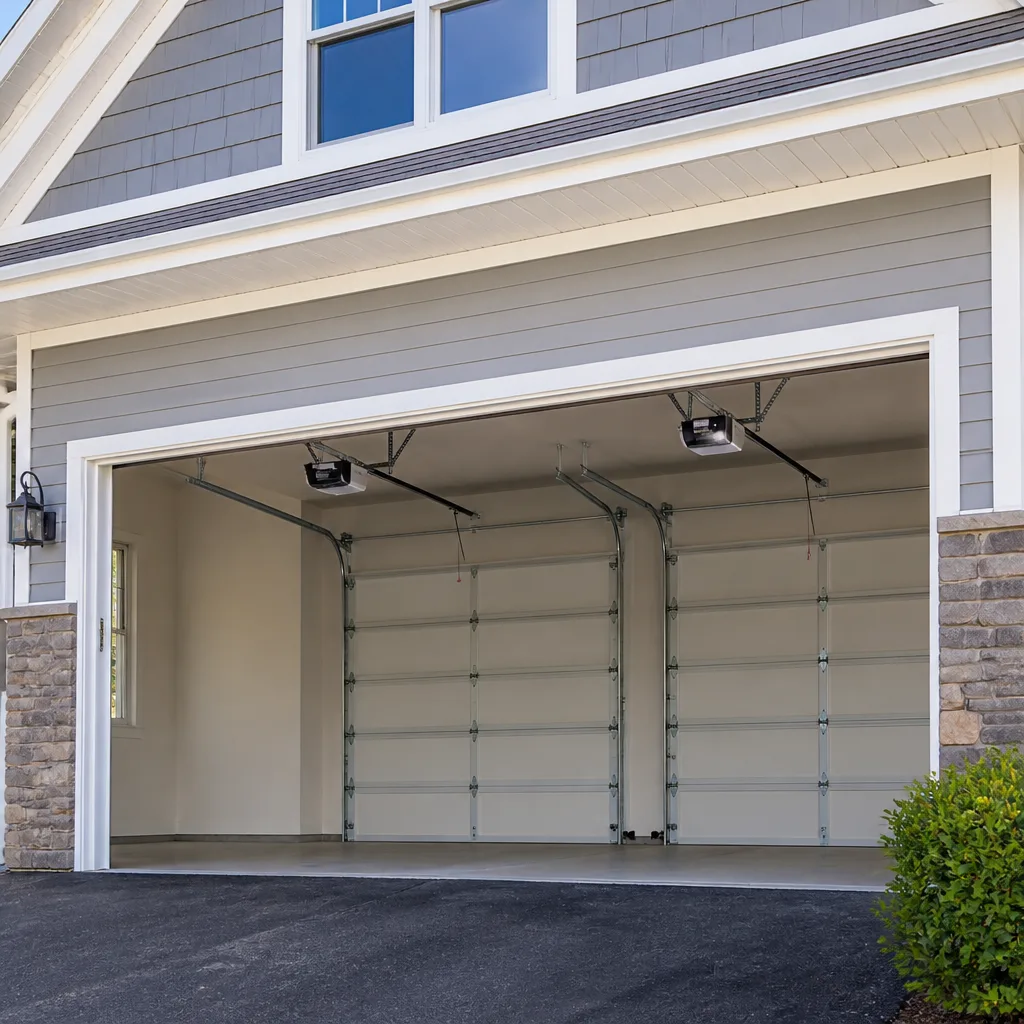 LiftMaster openers
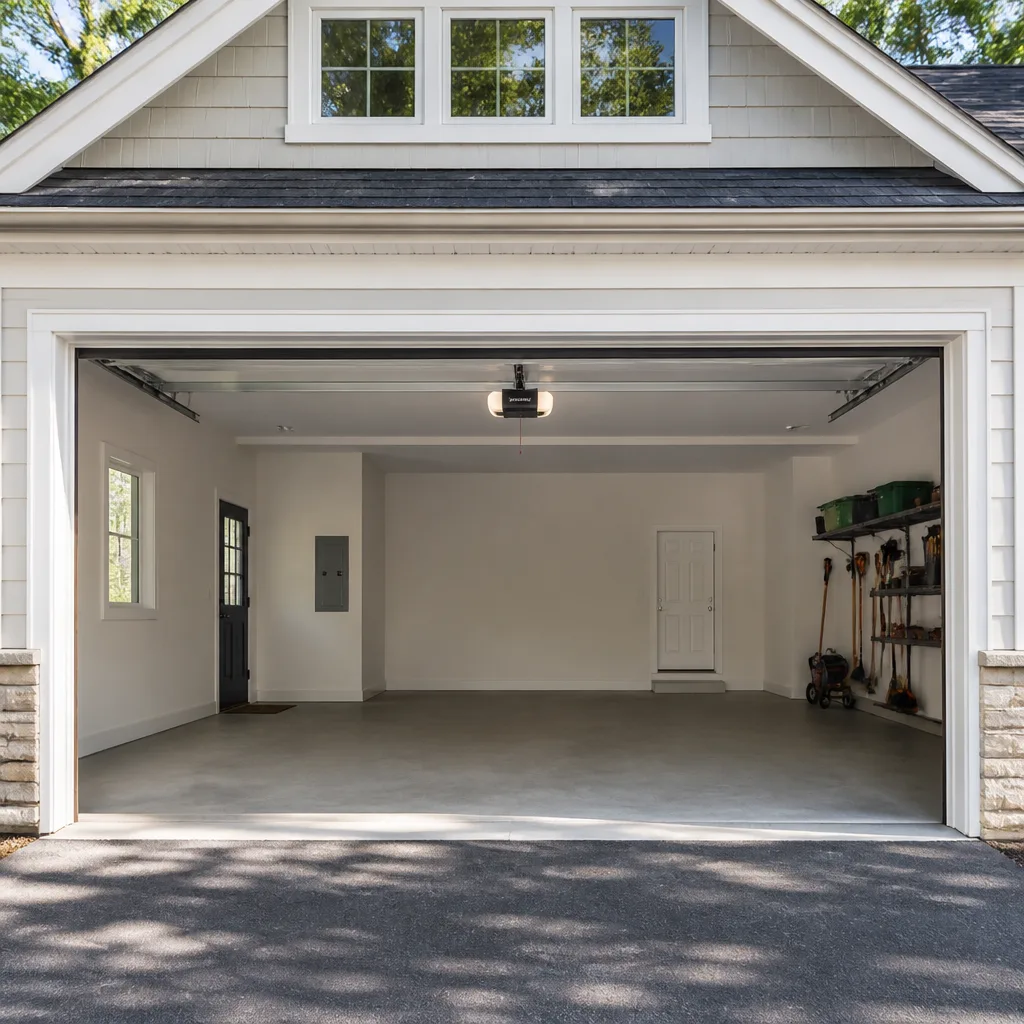 Chamberlain openers
Full 25-point door and opener safety check with every visit - springs, cables, rollers, tracks, and your LiftMaster or Chamberlain opener included
You get a price before we start. It does not change when the truck arrives.
Get your free estimateThe Complete Guide to Garage Doors in Kansas City
Most garage door advice you’ll find online was written for a climate that doesn’t exist here. Kansas City sits in a convergence zone where Gulf moisture meets Arctic air, and the result is a metro that logs more freeze-thaw cycles than Chicago and more heat index days than St. Louis. A door spec’d for a “typical Midwest home” is already behind the curve before the first hard freeze. Add clay-heavy soil that shifts under every slab, and you get garage door problems nobody’s product brochure mentions. This guide covers what actually matters for Kansas City doors: insulation values, soil movement, housing stock differences, realistic lifespans, and when to repair versus replace.
Quick Answer
A garage door in Kansas City needs to survive roughly 100-plus freeze-thaw cycles a year, summer heat index readings above 100°F, and foundation movement from expansive clay soil. That means an insulated door rated R-9 or higher for attached garages, annual balance and alignment checks, and a brand-agnostic repair approach that fits whatever opener or panel system is already on your house. Most door problems here trace back to one of three things: spring fatigue from temperature swings, track misalignment from slab movement, or opener strain from a door that’s heavier than it was designed to lift.
Styles & brands we work with
- Raised-panel steel
- Carriage house
- Modern flush
- Full-view glass
- LiftMaster openers
- Chamberlain openers
Table of Contents
- How Kansas City’s Climate Wears Out Garage Doors
- Clay Soil and Foundation Movement: The Alignment Problem
- Which Insulation R-Values Actually Matter Here
- Lenexa Subdivisions vs. Wyandotte County Bungalows
- Why Multi-Brand Expertise Matters on a Kansas City Street
- Realistic Door Material Lifespans in This Climate
- Seasonal Maintenance Checklist
- Repair or Replace? A Decision Framework
How Kansas City’s Climate Wears Out Garage Doors
A torsion spring is a fatigue component. It’s designed to cycle a set number of times before it fails, and every open-close cycle counts against that life. What most homeowners don’t realize is that temperature swings accelerate the wear. When a spring goes from 20°F at dawn to 55°F by afternoon and back down again, the metal expands and contracts slightly each time. In a mild climate, that’s a slow process. In Kansas City, where a single week in March can deliver three hard freezes and two 70-degree afternoons, the springs on your door are working harder than the same springs on an identical door in a coastal California garage.
Here’s what that means in practice:
- Springs fail faster. The cycle count matters, but so does the thermal stress. A door that gets used four times a day in Kansas City will typically see spring failure sooner than the manufacturer’s estimate for a stable climate.
- Seals and weatherstripping degrade. The rubber bottom seal on a Kansas City door takes UV from July sun and freeze-cracking from January. It needs inspection every fall, not every few years.
- Lubrication dries out. Cold pulls moisture from lubricant, heat bakes it off. Rollers and hinges need re-lubrication more often here than in temperate zones.
- Panel warping shows up on south-facing doors. The afternoon sun on a west- or south-facing garage door can push surface temperatures well above ambient. Steel panels expand, wood panels dry and cup.
None of this is a reason to panic. It’s a reason to pay attention. A garage door in Kansas City that gets a yearly tune-up will outlast one that doesn’t by a meaningful margin, and the tune-up costs far less than premature replacement. If your door is already showing strain, garage door repair is almost always cheaper than waiting for a failure at 7am on a workday.
Clay Soil and Foundation Movement: The Alignment Problem
Kansas City sits on some of the most expansive clay soil in the country. That clay swells when wet and shrinks when dry, and it does this dramatically. During a wet spring, the soil under a garage slab can push up. During a dry August, it pulls away. The slab itself is usually stable enough, but the framing and the door opening above it move slightly. Over years, that movement shows up as a garage door that no longer sits square in its opening.
What does a misaligned door look like? Here are the signs we look for:
- The gap along one side is wider than the other. Look at the space between the door panel and the weatherstripping. If it’s tight at the top and open at the bottom, or wider on one side, the opening has shifted.
- The door binds partway up. A door that runs smoothly for the first few feet and then hesitates is telling you the tracks are out of plumb relative to the door’s travel.
- The opener strains or reverses. Modern openers have force sensors. When a door binds, the opener works harder, and eventually the safety reverse kicks in. That’s rarely an opener problem. It’s usually an alignment problem.
- Rollers wear unevenly. If one set of rollers is chewed up faster than the others, the door isn’t tracking straight.
The fix isn’t always structural. Sometimes re-plumbing the tracks and adjusting the hinges resolves it. But the root cause is the soil, and it doesn’t go away. That’s why an annual check matters more in Kansas City than in a market with stable ground.
Which Insulation R-Values Actually Matter Here
If your garage shares a wall with your house, insulation is not a luxury. It’s the difference between a bedroom that stays comfortable in July and one that fights your air conditioner all summer. R-value measures resistance to heat flow. Higher is better, but the number that matters depends on whether the garage is attached or detached.
For an attached garage in Kansas City:
- R-9 to R-12 is the practical minimum. This covers most production-built subdivision homes and handles typical summer heat gain reasonably well.
- R-13 to R-16 is a better target. A door in this range keeps the garage noticeably cooler in August and warmer in January, which reduces the load on your HVAC system and protects anything stored in the garage from temperature extremes.
- R-18 and above is for specific cases. If the garage is used as a workshop, has a conditioned room above it, or you’re in a newer build with tight envelope standards, the higher R-value earns its cost.
For a detached garage, insulation matters less for comfort and more for protecting the door itself. A Kansas City detached garage sees the full force of summer sun and winter cold on both sides. An insulated door holds up better because it resists panel warping from uneven heating.
Polyurethane foam cores outperform polystyrene beadboard at the same nominal R-value, and they hold that value longer because they don’t degrade from moisture. If you’re comparing a Clopay door with a polyurethane core against a similarly rated door with polystyrene, the polyurethane one will likely serve you better in this climate over ten years. It’s not about the sticker number. It’s about how the number holds up.
Lenexa Subdivisions vs. Wyandotte County Bungalows
Drive from a newer Lenexa subdivision into an older Wyandotte County neighborhood and you’re looking at two completely different garage door problems.
Lenexa and the western suburbs: Most of these homes were built in the last 30 years with standard 16-foot double doors and 8-foot ceilings. The door openings are consistent, the framing is modern, and the openers are usually LiftMaster or Chamberlain units from the original build. The typical issues here are spring wear, opener logic board failures, and weatherstripping that’s aged out. The doors themselves are usually steel and holding up fine. When a Lenexa homeowner calls, it’s almost always a repair or opener issue, not a replacement conversation.
Older Wyandotte County bungalows: Many of these homes were built in the 1950s or earlier with single-car garages and narrow openings, sometimes just 8 or 9 feet wide. The doors are often wood, and the original framing has moved with the soil over decades. Sourcing a replacement panel for a narrow wood door is harder than it sounds, because the width isn’t standard anymore. And on some of these homes, the garage was originally built for a car that was smaller than what’s parked there now. A homeowner who wants to fit a modern SUV has a genuine clearance problem, not just a door problem.
The practical takeaway: a garage door quote for a Lenexa home and a garage door quote for an older Wyandotte County home are not comparable. The scope is different. We work on what you already have, and in older neighborhoods that often means a repair approach that preserves the original opening rather than forcing a standard-size replacement.
Why Multi-Brand Expertise Matters on a Kansas City Street
On a single block in Kansas City, you can find a 1960s home with a Craftsman opener installed in the 1990s, a 2005 build with a Genie belt drive, and a 2020 build with a LiftMaster myQ smart opener. That’s three different systems with three different diagnostic paths, three different parts inventories, and three different sets of known failure modes. A technician who only knows one brand is going to struggle on two of those three houses.
Garage doors are all we do, and we’ve trained on eight of the industry’s most widely installed door and opener brands. That matters because diagnosis is where most garage door work goes wrong. A tech who doesn’t recognize a Chamberlain logic board failure pattern will guess at the problem, replace the wrong part, and come back. A tech who’s worked on hundreds of them knows the pattern in the first five minutes.
The brand-agnostic approach is the other half of it. When we recommend a repair or a replacement part, the recommendation follows what actually fixes the customer’s system. Not what carries the best dealer margin. Not what’s easiest to source. If the right answer is a Wayne Dalton replacement panel, that’s what we quote. If the opener is a Genie that’s worth repairing, we repair it.
Opener work gets its own attention. Openers fail differently than doors do. A door problem is usually mechanical: springs, cables, tracks, panels. An opener problem is electronic or electromechanical: logic boards, capacitors, drive gears, safety sensor alignment, Wi-Fi connectivity on the newer smart units. Treating garage door opener repair as a specialty rather than an afterthought means the fix is done correctly the first time, not as a guess.
Realistic Door Material Lifespans in This Climate
Manufacturer lifespans are usually quoted for ideal conditions. Kansas City isn’t ideal conditions. Here’s a more honest picture based on what we see in this market:
| Material | Manufacturer Estimate | Kansas City Realistic Range |
|---|---|---|
| Steel, insulated | 20-30 years | 15-25 years |
| Steel, uninsulated | 15-20 years | 12-18 years |
| Wood (solid) | 20-30 years with maintenance | 12-20 years with consistent sealing |
| Wood composite | 15-25 years | 12-18 years |
| Aluminum | 20-25 years | 15-22 years |
| Fiberglass | 15-20 years | 10-15 years |
The variables that pull lifespan down in Kansas City are the freeze-thaw cycle, UV exposure on south- and west-facing doors, and movement from the clay soil. A wood door in Kansas City needs re-sealing more often than a wood door in a drier climate, because the moisture swings open up cracks in the finish.
The spring system lifespan is separate from the door. Even a door that’s in great shape will likely need one or two spring replacements over its life. A matched pair of springs is usually replaced together, and the pair costs roughly twice what a single spring does. If you’re budgeting, plan for spring replacement as a maintenance cost, not a repair emergency.
Seasonal Maintenance Checklist
A tuned garage door lasts longer and runs quieter. Here’s the basic rhythm for a Kansas City door:
- Every fall, before the first freeze: Check the bottom weather seal for cracks. Re-lubricate rollers, hinges, and the torsion bar with a garage-door-specific lubricant. Test the safety reverse by placing a roll of paper towels under the door and closing it.
- Every spring, after the last freeze: Inspect the springs for rust or visible separation. Test the door’s balance by disconnecting the opener and lifting it halfway. If it won’t hold, the springs have lost tension.
- Once a month: Look at the gap along both sides of the door. If it’s changed, the alignment has shifted. Listen for new noises. A door that’s suddenly louder is telling you something.
- Once a year: Get a professional balance and alignment check. This is where the soil movement catches up with you, and a technician can catch it before it turns into a cable or opener failure.
Springs and cables are the one part of this work no homeowner should touch. A torsion spring under tension can cause serious injury if it releases unexpectedly, and the cables are equally dangerous. That’s a trained-professional job, and it’s worth saying plainly. We’re happy to explain how the system works so you understand your door, but we won’t walk anyone through a spring replacement. Please don’t attempt it.
Repair or Replace? A Decision Framework
The instinct is often to replace because replacement feels more decisive. But a repair done correctly is frequently the better call, especially on a door that’s structurally sound. Here’s how we think about it:
- Repair if: the door is under 15 years old and the problem is a spring, cable, roller, track, or opener. These are normal wear items and repair is almost always cheaper than replacement.
- Repair if: one panel is damaged but the rest are intact. Panels are replaceable, and color-matching is usually possible on common models from Clopay, Amarr, and Wayne Dalton.
- Repair if: the door is older but the opening is non-standard. A custom replacement is expensive; a repair that preserves the opening makes more sense.
- Replace if: the panels are structurally compromised across the whole door, or the door is over 25 years old and repairs are adding up faster than they should.
- Replace if: you’re upgrading from an uninsulated door to an insulated one on an attached garage. The improvement in comfort and HVAC load justifies the cost.
- Replace if: the door opening has shifted enough that no adjustment can bring the existing door back into a safe operating alignment.
We’ll always tell you which one applies. If repair is the right answer, that’s the quote you get.
Common Mistakes to Avoid
- Ignoring the annual alignment check. The clay movement is slow and invisible until it isn’t. A yearly check catches a shifted opening before it becomes a cable failure.
- Using WD-40 on the tracks or rollers. It’s a solvent, not a lubricant. It’ll strip the existing grease and attract dust. Use a proper garage door lubricant.
- Patching a wood door without fixing the moisture source. A wood door in Kansas City that keeps cracking is usually getting moisture from behind or from the bottom seal. Fix the seal before refinishing.
- Assuming any technician knows every brand. A generalist handyman or a single-brand installer will have gaps. Garage doors are all we do, and that focus is why the diagnosis is usually correct the first time.
- Buying the cheapest opener without checking compatibility. A new Genie opener won’t necessarily integrate with a home automation system that was set up for LiftMaster. Check compatibility before you buy.
- Replacing the door when the opener is the problem. We see this often. The door feels heavy, so the homeowner assumes the door is shot. It’s actually a spring issue, and the door is fine.
- Overlooking the weather seal through winter. A cracked bottom seal lets in snowmelt, which freezes and can bind the door. Check it in October, not January.
See the difference
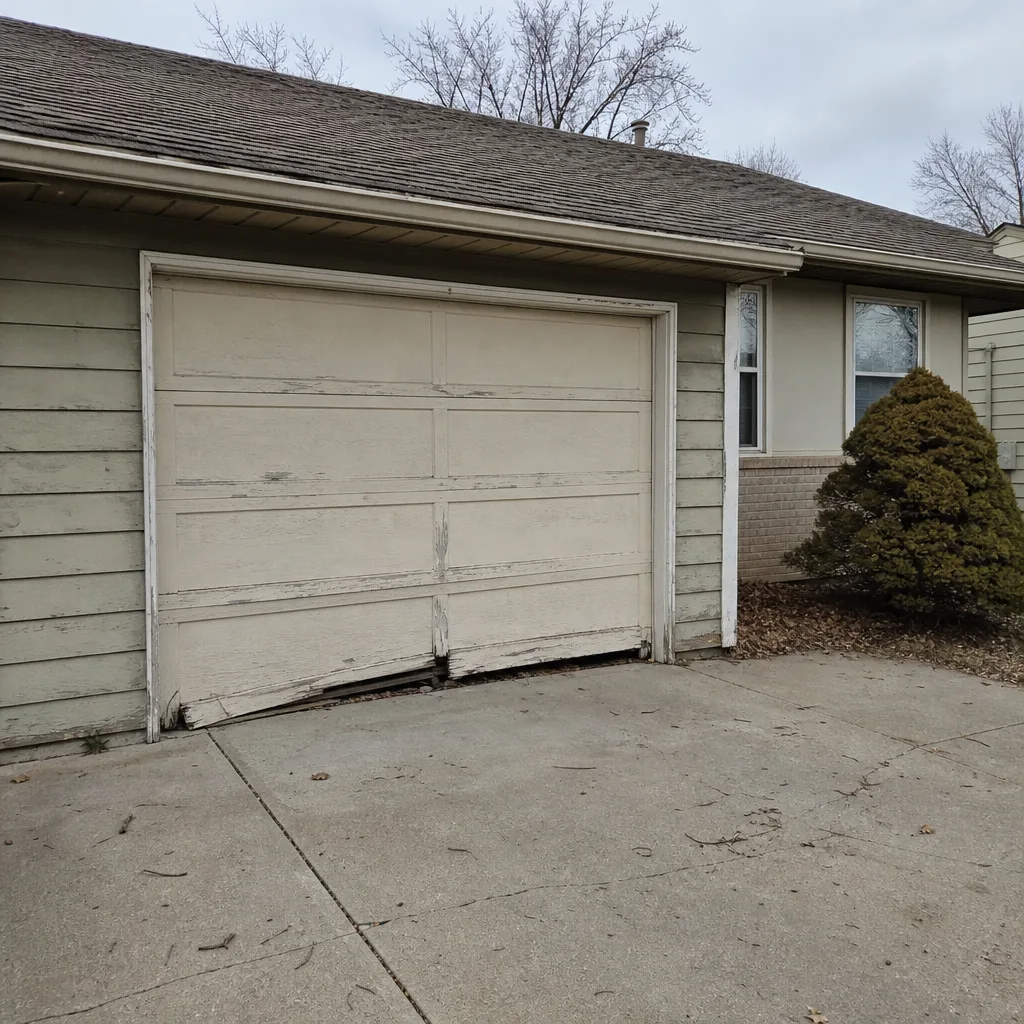 Before
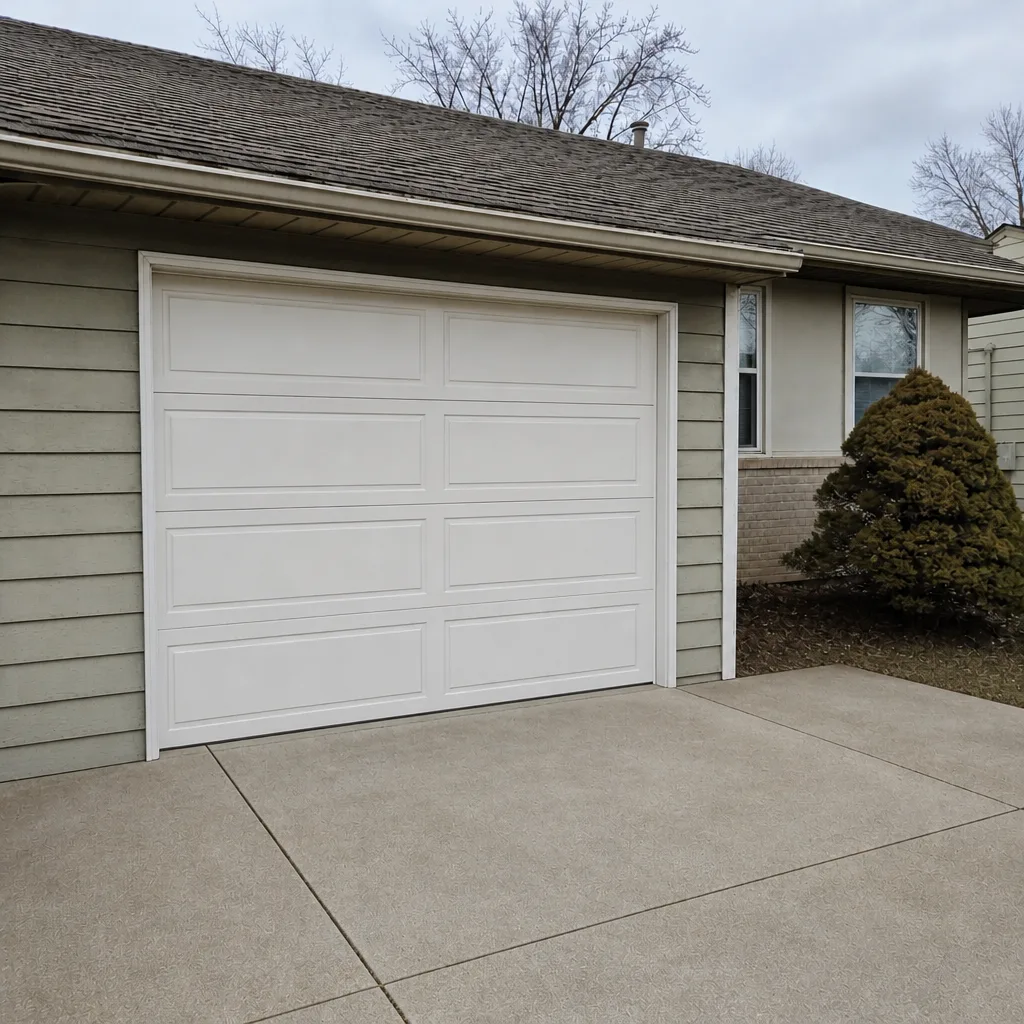 After
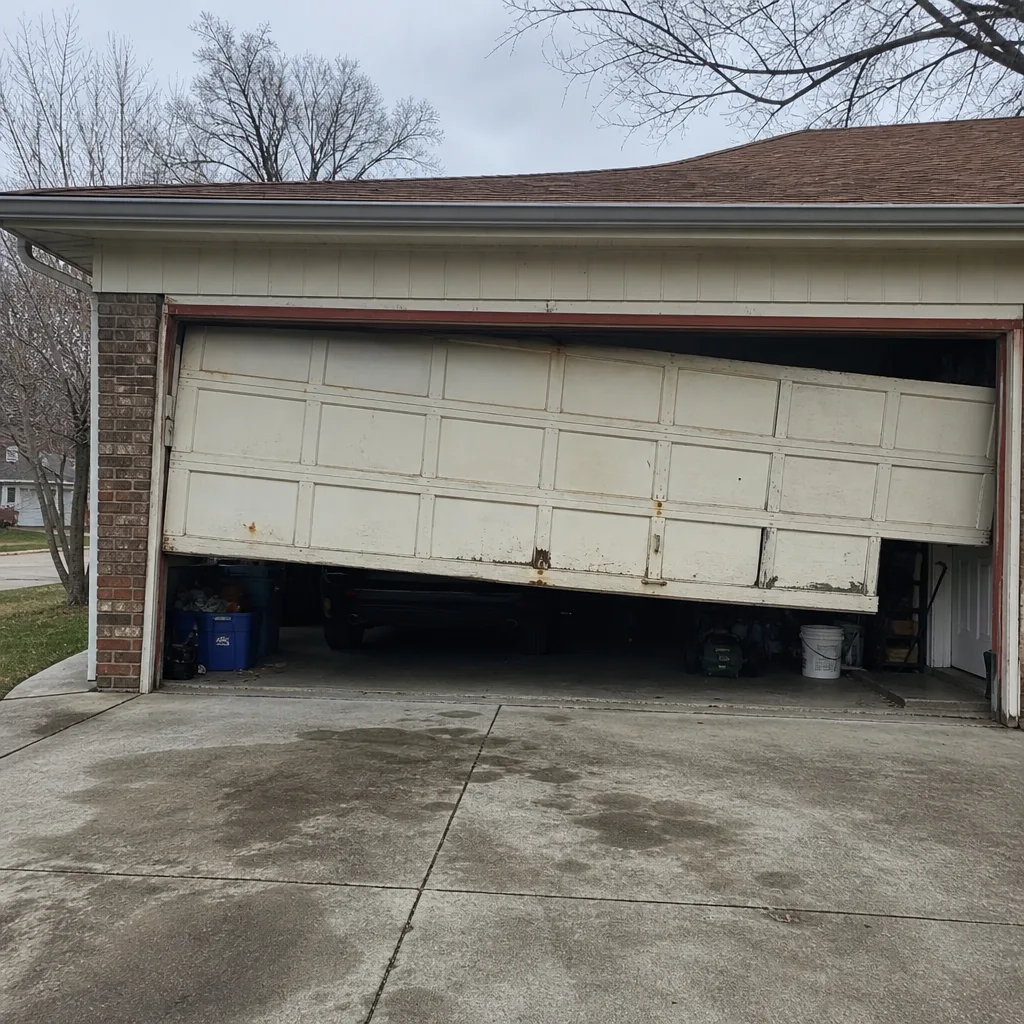 Before
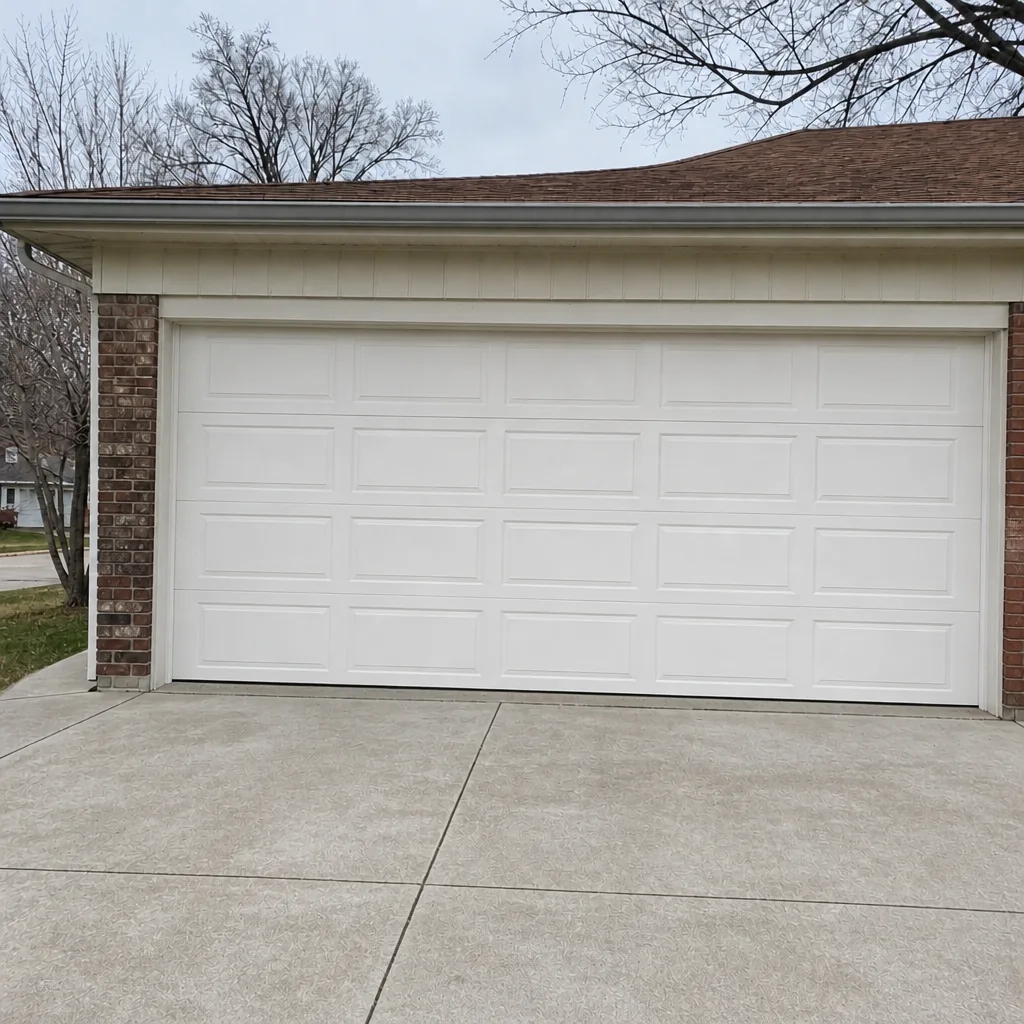 After
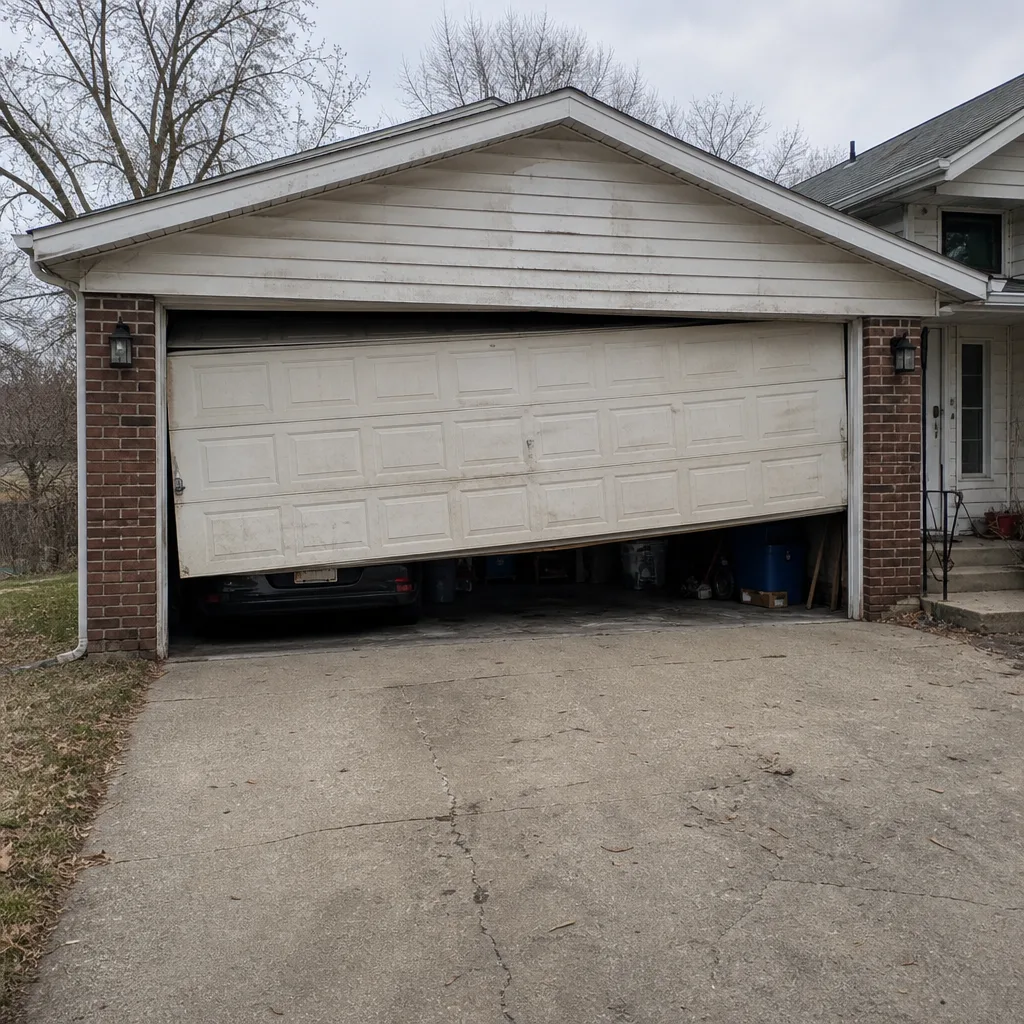 Before
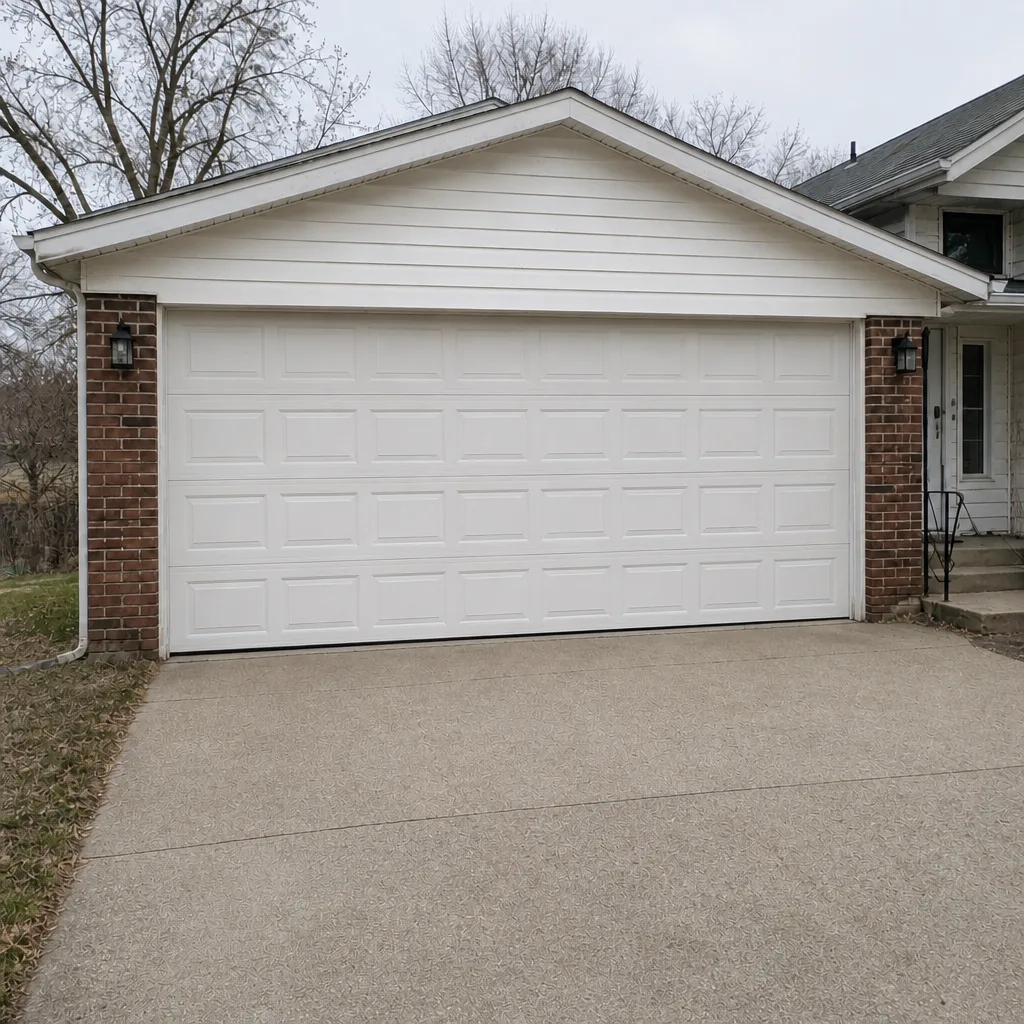 After
When to Call a Professional
Call a professional if the door won’t close evenly, if the opener reverses without an obstruction, if you see a gap along one side that wasn’t there before, or if the door has become noticeably louder or harder to lift. Call immediately if a spring has visibly broken, if a cable has snapped, or if the door hangs out of level. These are safety issues, not maintenance items, and they can turn into something worse if the door is operated in that condition. Springs and cables are dangerous under tension and should never be touched by anyone who isn’t trained to work on them. Graystone Garage Door Repair offers free estimates in Kansas City – call (855) 525-9808. We answer 24/7. Fast dispatch from 7am to 7pm.
Frequently Asked Questions
Most garage door repairs in Kansas City land in a range that depends on the specific problem and the part required, and the written estimate sets the final number before any work starts. Spring replacement, opener repair, and panel replacement each carry different typical ranges. Call (855) 525-9808 for an exact quote – estimates are free and the price is agreed before we begin.
In many cases yes. We answer 24/7 and dispatch technicians from 7am to 7pm, Sunday through Friday. If you call outside dispatch hours, we book you into the next opening. Call (855) 525-9808 and we’ll give you a realistic arrival window.
No. The price you agree to in the written estimate is the price you pay. If we find something unexpected during the work, we stop and discuss it with you before proceeding. No surprises on the invoice. Call (855) 525-9808 to get a free estimate.
We carry common parts for the most widely installed brands, including springs, rollers, hinges, and weather seals. For less common parts or specific panel colors, we may need to order, and we’ll tell you the timeline upfront.
Aim for R-9 to R-12 as the practical minimum for an attached garage in this climate, with R-13 to R-16 being a better target if you want real comfort in July and January. For a detached garage, insulation is more about protecting the door from panel warping than about comfort inside the house.
Because the clay soil under Kansas City moves. The slab is usually stable enough, but the framing above it shifts slightly as the soil swells and shrinks. That movement shows up as a door that no longer sits square. An annual alignment check catches it before it becomes a bigger repair.
Repair is usually the better call on an older Wyandotte County bungalow, because the narrow opening often doesn’t accommodate a standard modern replacement without significant framing work. We work on what you already have, and we’ll tell you honestly whether repair or replacement makes more sense for your specific door.
Yes. We’ve trained on eight of the most widely installed door and opener brands, including LiftMaster, Chamberlain, Genie, Clopay, Amarr, Wayne Dalton, Craftsman, and Raynor. We’re not a dealer for any single brand, so the recommendation follows what fixes your system, not what carries the best margin.
The Bottom Line
Garage doors in Kansas City face conditions that generic national guides don’t account for. The freeze-thaw cycle wears springs faster. The clay soil shifts the framing. The housing stock spans 1950s wood doors and 2020s smart openers on the same street. A door that gets an annual alignment and balance check will outlast one that doesn’t by a meaningful margin, and a brand-agnostic repair approach will save you from unnecessary replacement. When something goes wrong, get it looked at before the problem compounds. Graystone Garage Door Repair has been serving the metro since 2011, and garage doors are all we do. Call (855) 525-9808 for a free estimate. We answer 24/7. Fast dispatch from 7am to 7pm, Sunday through Friday. Solid work. No surprises.
Written by the team at Graystone Garage Door Repair, serving Kansas City since 2011.