
Last updated November 14, 2026
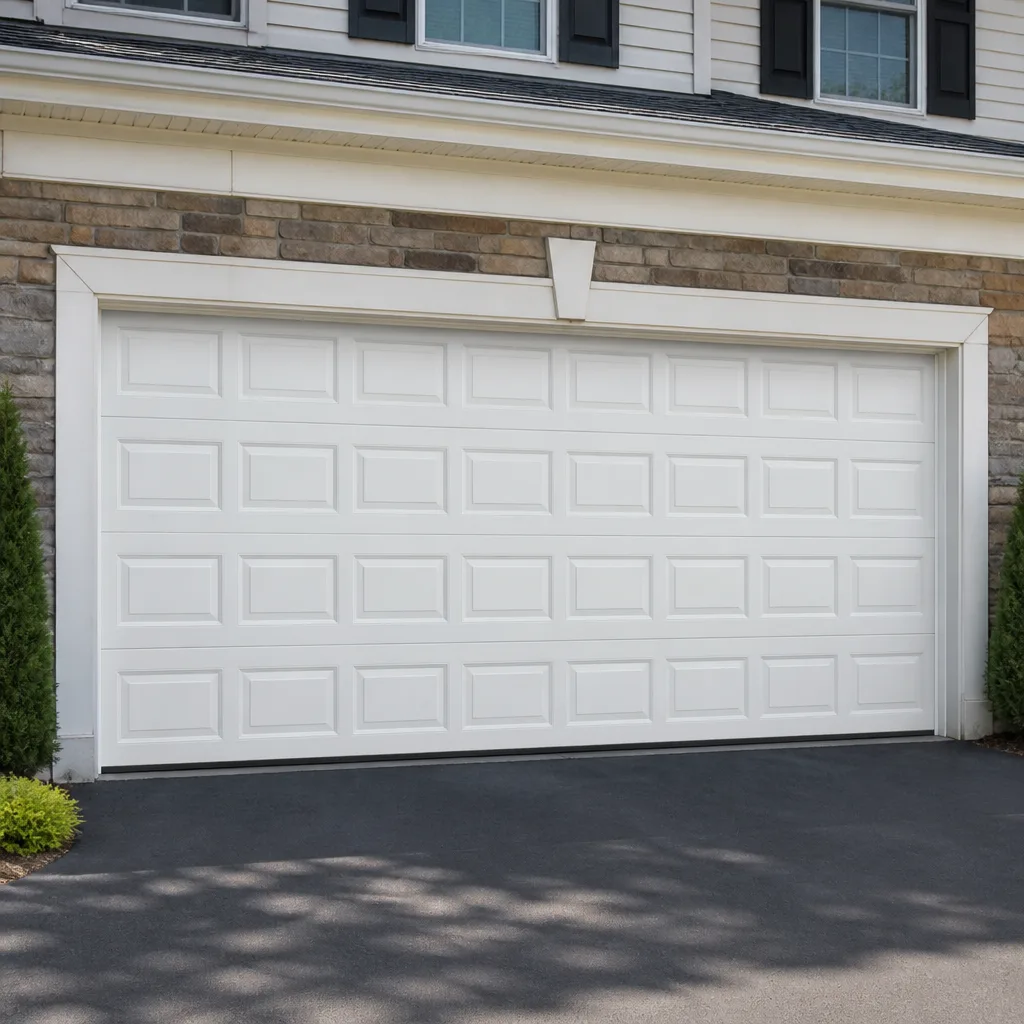 Raised-panel steel
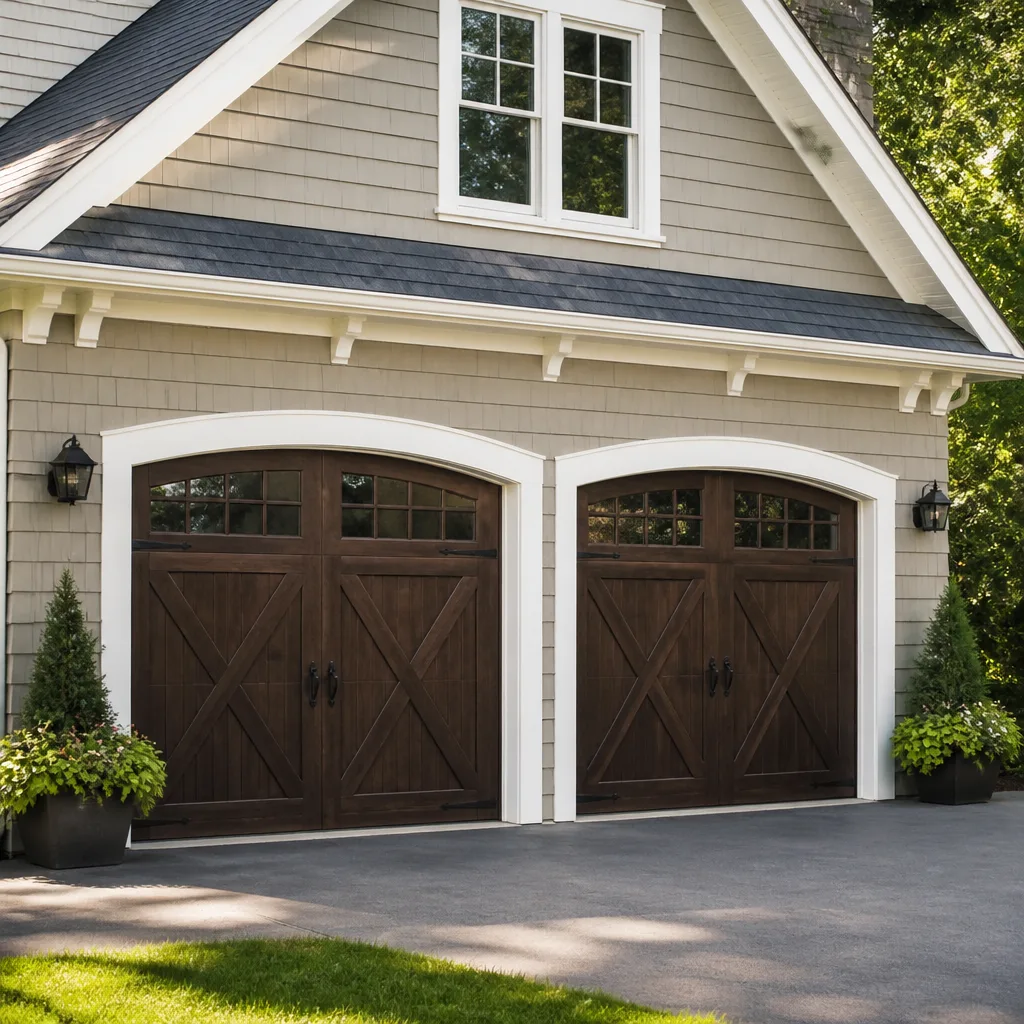 Carriage house
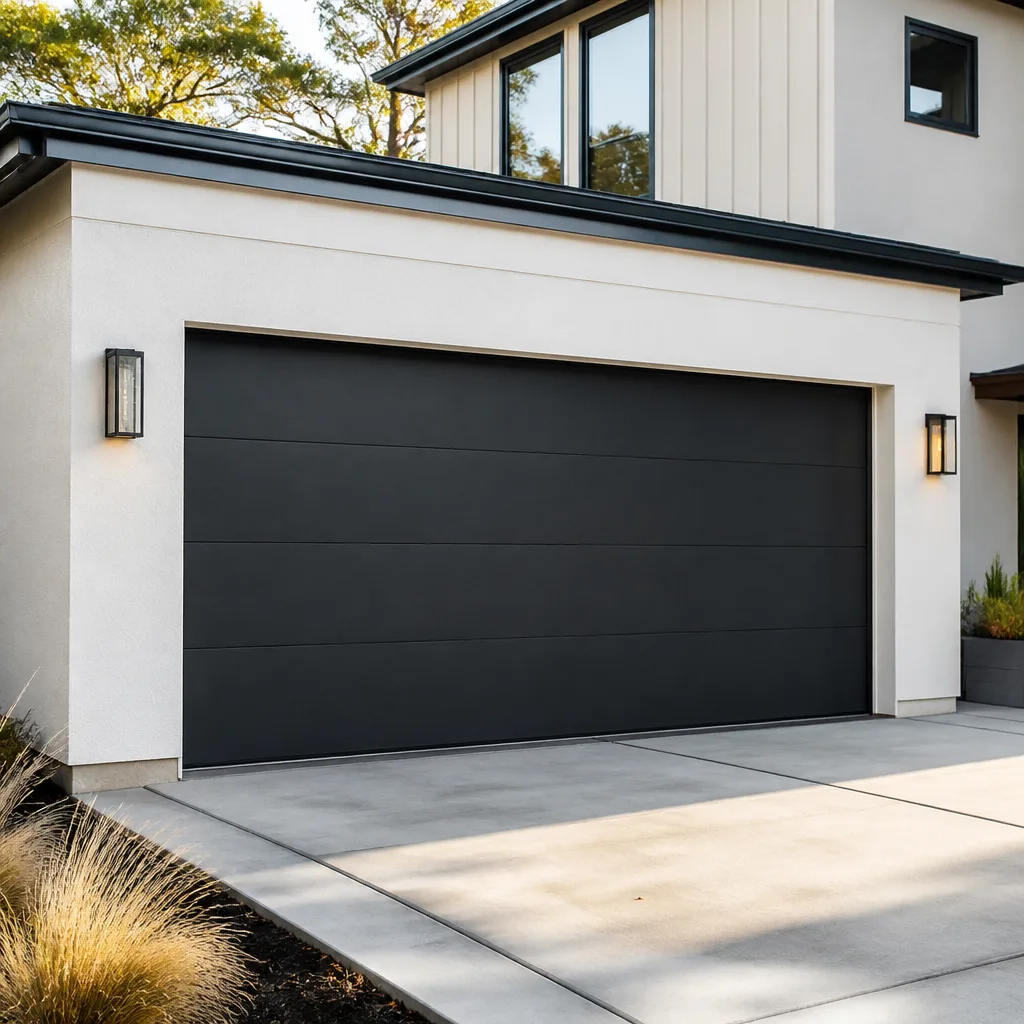 Modern flush
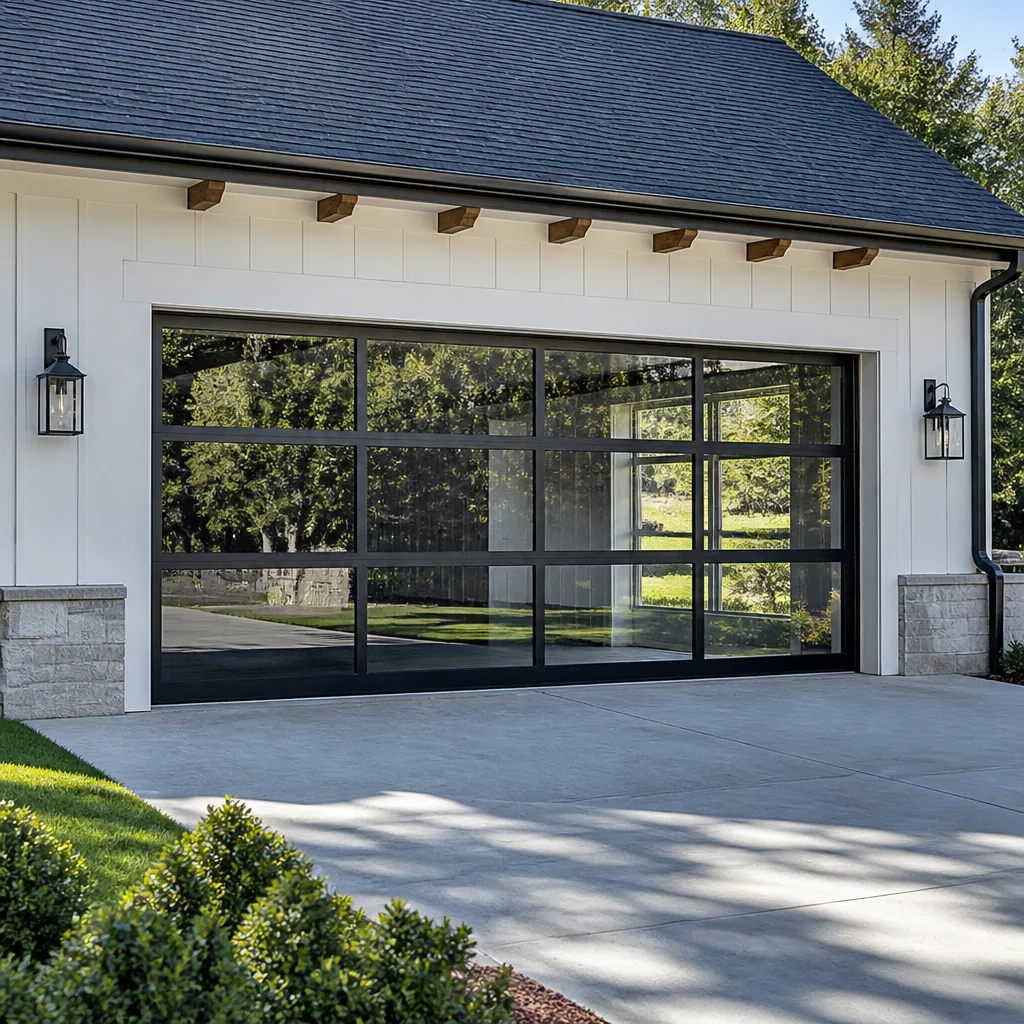 Full-view glass
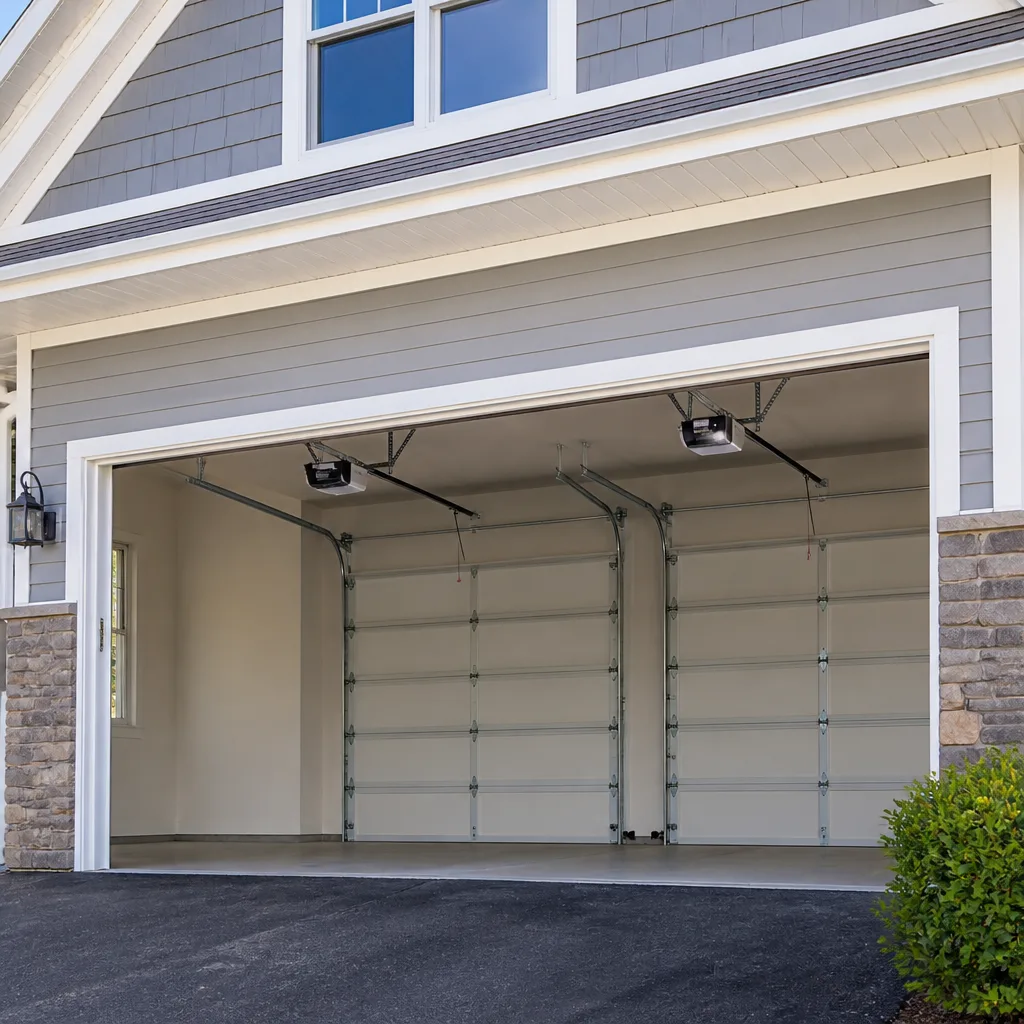 LiftMaster openers
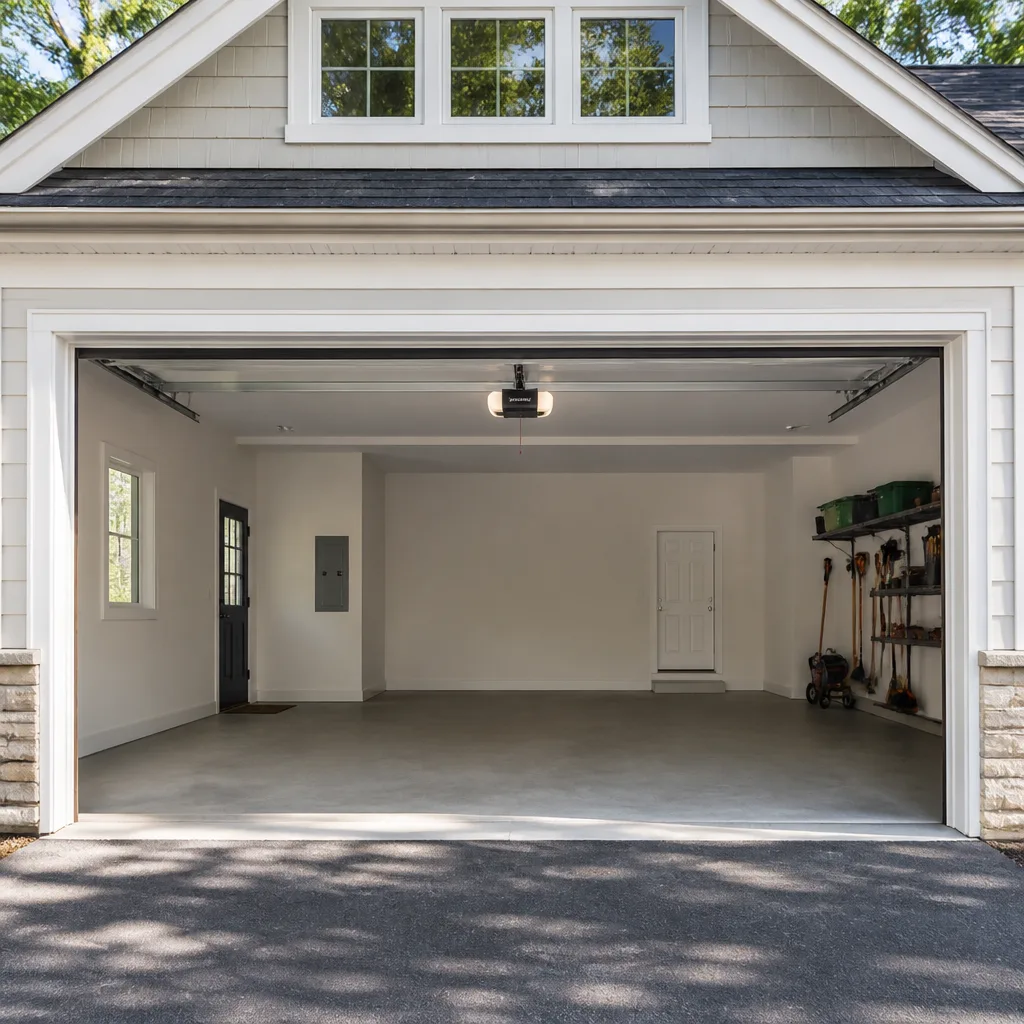 Chamberlain openers
Full 25-point door and opener safety check with every visit - springs, cables, rollers, tracks, and your LiftMaster or Chamberlain opener included
You get a price before we start. It does not change when the truck arrives.
Get your free estimateGarage Door Warning Signs: A Kansas City Homeowner’s Reference Guide
Most garage doors don’t fail without warning. They fail because the warning was misread. A grinding noise through the whole cycle and a grinding noise in the last few inches of travel sound identical from the driveway, but they point to completely different parts, and one of them can take a panel and a track with it if you keep running the door. Kansas City homes put their doors through a lot: freeze-thaw cycles that work fasteners loose, road salt carried in on the undercarriage, and thousands of open-close cycles a year. This guide explains what each sound, sight, and symptom actually means, how to tell a normal break-in noise from a failing component, and how to judge whether a problem is stable or getting worse.
Quick Answer
The most serious garage door warning signs are a door that reverses before it reaches the floor, a snapped torsion spring, a bent or cracked bottom section, a door that hangs crooked from the frame, and any grinding or banging that gets louder over several days. Squealing, light rattling, and a single pop on a cold morning are usually routine and can wait for a scheduled visit. When in doubt, stop running the door and get it looked at before the problem compounds.
Styles & brands we work with
- Raised-panel steel
- Carriage house
- Modern flush
- Full-view glass
- LiftMaster openers
- Chamberlain openers
Table of Contents
- What Each Sound Actually Means
- Visual Signs Specific to Kansas City Doors
- The Sagging Section Test
- When Opener Behavior Points to the Door
- Intermittent, Consistent, or Getting Worse: The Timeline Signal
- Signs That Mean Stop Using the Door
- How to Decide: Schedule or Call Now
What Each Sound Actually Means
Squealing, grinding, rattling, and banging are four different languages. Learning to hear the difference is the single most useful skill a homeowner can build, because each one maps to specific hardware and each one has a different urgency.
Squealing
A high, steady squeal usually points to dry hinges, rollers, or a torsion tube that needs lubrication. It’s the most benign of the four. A squeal that appears only in cold weather is often a stiff, dry roller waking up as the steel contracts.
Grinding
Grinding is the sound of metal being removed. Where you hear it matters:
- Grinding throughout the whole cycle often means a roller is riding on a worn bearing or a track is pinching the roller. If the door shudders as it moves, that’s the track talking.
- Grinding only in the last few inches usually points to a cable rubbing against a worn drum or a torsion spring that has begun to unwind unevenly. This one deserves a professional look, because cables are under extreme tension and should never be adjusted by a homeowner.
- Grinding at the opener head rather than the door is a gear or drive problem and belongs in a different diagnostic bucket entirely.
Rattling
Light rattling is often just loose hinge screws and is common on older Kansas City doors that have been through a few decades of seasonal expansion. If the rattle turns into a bang, keep reading.
Banging
A single bang from the torsion tube at the opener’s first lift of the day is usually the spring unwinding under load. A bang that repeats every cycle, or a bang that comes from the track as the door reaches the top of travel, is a symptom of a bent track or a section that’s separating from the hinge. Stop running the door and call for a technician.
Visual Signs Specific to Kansas City Doors
Kansas City has a visual clue most other markets don’t see as often: rust on the torsion springs in a pattern that matches vehicle traffic into the garage. Winter road spray from I-35 and I-70 coats the undercarriage of every car pulling in. That salty slurry drips onto the spring seat and the bottom hinge, and the rust pattern follows it.
Here’s what to look for:
- Rust concentration on the spring seat and the bottom hinge rather than evenly across all hardware. If the rust is heavily weighted toward the underside of the door and the spring, salt spray is the cause. A rusted spring is a weakened spring, and a weakened torsion spring is the single most common cause of a door that suddenly won’t lift.
- Rust streaks on the bottom section of the door often indicate that water is pooling on the threshold and wicking up. Kansas City’s freeze-thaw cycles can lift a slab slightly at the door lip and leave a puddle after every rain.
- Rust at the roller brackets points to condensation that forms on the inside of an unheated garage when warm air hits a cold door on an April morning.
None of these rust signs means a door is unsafe today. They do mean the door is on a clock. Rusted springs, in particular, go from “holding” to “snapped” without much notice. If the hardware on your door is showing salt spray rust, that’s a good reason to have us look at it before spring thaw. garage door repair technicians know what to check first.
The Sagging Section Test
A sagging section is a visual problem until it isn’t. Here’s how the test works, and how to read what you see.
- Look at the horizontal seam between every panel from inside the garage. Each seam should read as an even, straight line. A gap that widens toward one end of a section, or a seam that’s noticeably wider in the middle panel than the panels above and below it, is the door section itself deforming.
- Check the vertical gap between two adjacent sections. A gap wider than a credit card that reappears even after the door cycles means a hinge is loose or a section edge has bent. Return the door to the closed position before you measure.
- Look at the door from about ten feet back, at floor level. If a section sits slightly above or below its neighbor at one end, the panel has begun to buckle.
- Listen while the door runs. If a single panel binds or pops as it crosses a roller, the track and the section are no longer on the same plane.
Uneven gaps are the pre-failure signal for a full section replacement, which is far more expensive than the repair you’d get if the hinge or the roller were caught now. That’s the difference between a small fix and a new bottom section, and it’s the reason we tell Kansas City homeowners to check the seams twice a year. Garage doors are all we do, so when we look at a door, a buckled section is the first thing we’re looking for.
When Opener Behavior Points to the Door
An opener that hesitates, reverses, or loses remote range gets blamed for a lot of problems it didn’t cause. A LiftMaster or Chamberlain opener is a motor pushing against whatever the door and track present to it. When the door presents resistance, the opener does what it was designed to do: strains, stumbles, or reverses to protect itself.
Three patterns to read carefully:
- The opener hesitates on lift, then catches. That’s almost always the door, not the motor. A dry roller, a torsion spring that’s lost tension, or a slightly bent track will stall a good opener every time.
- The door reverses before it reaches the floor. Follow the door’s path by eye. If it touches an obstruction or the safety sensor beam is misaligned, fix that. If it reverses in clean air, the limit settings on the opener need adjustment, and on some models that means calling a technician who knows the brand. We work with Genie, Craftsman, and Raynor units as well as the two above, and are used to reading the specifics of each.
- Remote lag, or a remote that only works when you’re close. Check the battery and the antenna wire behind the opener head. If the remote works from a fresh battery and still only fires up close, it’s usually a bad logic board component on the older Craftsman units or a worn travel module on a Chamberlain.
The point is this: don’t buy an opener before you’ve ruled out the door. In our experience across Kansas City, most “opener failures” are door-side problems that turn out to be much less expensive. If a technician does need to look at the opener itself, that’s a specialist job we handle. See garage door opener repair for the full scope.
Intermittent, Consistent, or Getting Worse: The Timeline Signal
Every symptom has a timeline, and the timeline is often the only thing you need to decide between scheduling a visit and calling now. Three categories:
- Intermittent. The symptom shows up on one cycle and disappears on the next. Cold mornings are the most common trigger. Intermittent symptoms are usually early wear and can be scheduled.
- Consistent. The symptom happens every cycle, every time. The part has settled into a new, failing state. A consistent symptom that hasn’t gotten worse for weeks is stable, but it won’t fix itself. Schedule the visit before it progresses.
- Progressing. The symptom is getting louder, longer, or more frequent over days. A rattle that became a bang. A hesitation that became a reversal. A grind that now appears halfway up instead of only at the top. This is the category to call on the same day.
Here’s the practical rule: intermittent symptoms can wait for a scheduled visit. Consistent symptoms deserve a call this week. Progressing symptoms deserve a call today. A door that has gone from “clunky sometimes” to “loud every time” over the last month is progressing, even if it never fully failed. That’s the door that fills an emergency call later this season if it isn’t looked at now.
The timeline matters as much as the symptom. A short grinding noise that shows up once and then vanishes is a very different situation from the same noise getting louder across five consecutive cycles. Note which one you’re hearing, and pass that along when you call. It’s the first thing a good technician will ask about.
Signs That Mean Stop Using the Door
Some signs aren’t diagnostic puzzles. They’re instructions to stop using the door and get a trained technician out. Torsion springs, cables, and overhead hardware are under extreme tension and can cause serious injury; the moving door itself is a crush risk to anyone standing under it. If you see any of these, leave the door in its current position:
- A visible gap in the torsion spring. Both halves should meet cleanly in the middle. A clear separation means the spring has snapped. Do not try to raise the door by hand and do not attempt to open it with the opener.
- A slack or tangled cable. The lift cable runs under hundreds of pounds of tension. A cable hanging loose is a sign the tension is already released or the drum has failed. Do not touch it.
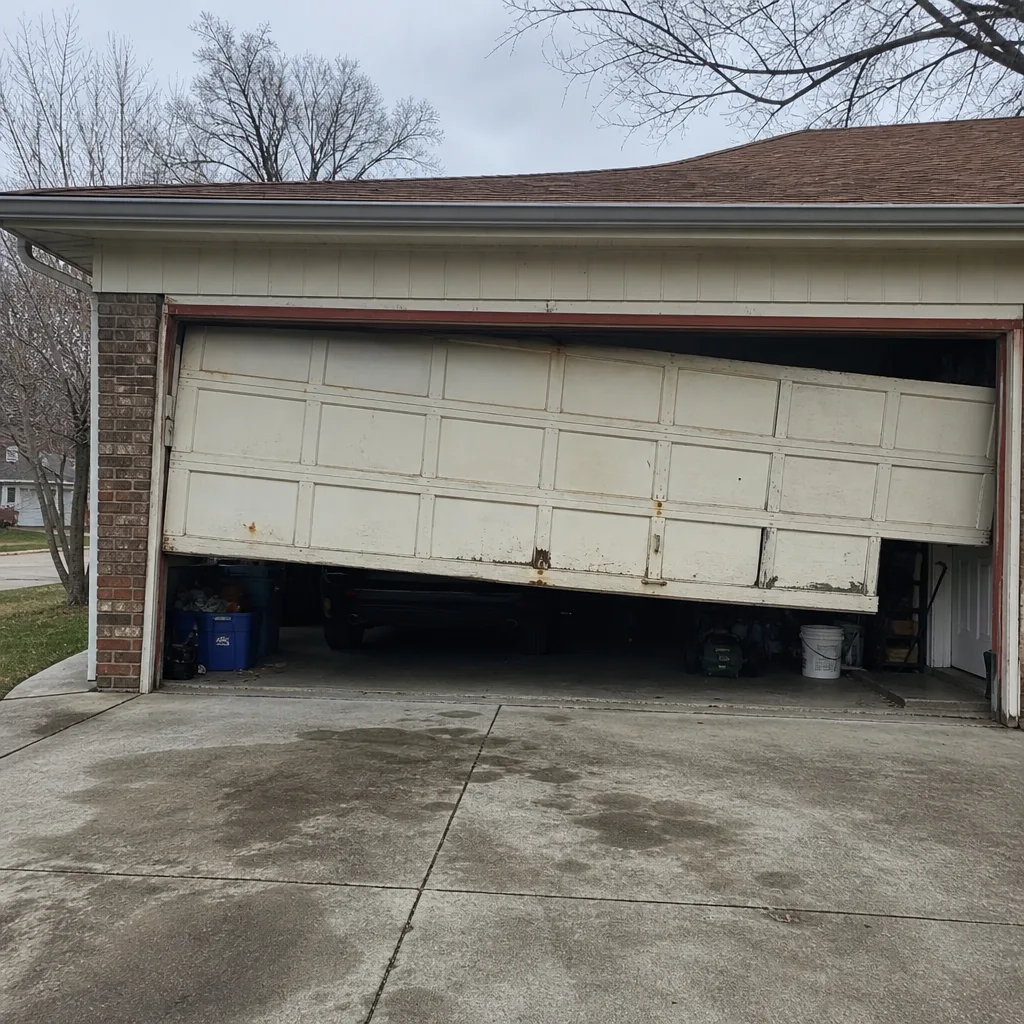
- A door hanging crooked from the frame. One side is lifting while the other is stuck. This means a spring or cable has failed on one side. Stop immediately and call.
- TorqueMaster-style springs behind a metal tube. On doors with a tube-enclosed spring system, the danger is hidden, and diagnosing it visually is impossible without the right tools. Don’t try.
If you see any of these on your Kansas City door, close the door to the safest position you can and call a technician right away. If you’re not sure whether a sign is dangerous, call and ask. We would rather talk you through a false alarm than hear about a door that came down on a vehicle or a person. If you’re in the market for a full view of what needs attention, Graystone Garage Door Repair handles the entire door, mechanical and opener side.
How to Decide: Schedule or Call Now
Here’s the decision flow we’d walk any homeowner through:
- Is any part visibly under tension failure? Snapped spring, slack cable, crooked door, door standing partly open with no counterbalance. Call now. Do not cycle the door.
- Is the symptom progressing over days? A rattle becoming a bang, a hesitation becoming a reversal, grinding moving from the top few inches to the full cycle. Call today. We answer 24/7. Fast dispatch from 7am to 7pm.
- Is the symptom consistent but stable? Same noise every cycle, no meaningful change in a week. Schedule a visit for the next few weeks.
- Is the symptom intermittent and mild? Occasional squeal, light rattle, single pop on a cold morning. Schedule it at your convenience. A maintenance check is the most economical way to get ahead of it.
If you’re in a Johnson County or Wyandotte County neighborhood and a winter cold snap has just started, the freeze-thaw cycle is the great amplifier. A door that squeaked in October will bang in January. That’s the season to be a little more conservative about symptoms. We’re a Kansas City business and know what the weather does to door hardware, so we’re used to hearing “it just started” in mid-November and figuring out whether the real answer is “it’s been coming since August.”
Common Mistakes to Avoid
- Greasing everything as a first response. Lubricant helps hinges and rollers, but on a torsion spring it can trap grit and accelerate wear. Identify the source of the sound first, then lubricate only what needs it.
- Assuming every opener problem needs a new opener. As covered above, hesitation and reversing are usually door-side. Buying a new opener to solve a dry roller wastes money and skips the actual fix.
- Ignoring the rust pattern because “it still works.” Late-season rust on a Kansas City spring looks cosmetic until the spring fails. Inspect under the door and along the spring seat after every winter.
- Replacing a single section without checking the track. A new bottom panel on a bent track is a waste. The track and rollers cause panel failures more often than occasional impact does.
- Adjusting travel and force limits as a workaround for a failing door. Cranking up the opener’s force setting to push a binding door damages the door, the track, and the opener all at once. Fix the door, then reset the opener.
- Treating a sagging section as a cosmetic problem. Uneven gaps between panels widen as the door cycles. By the time the gap is obvious from the sidewalk, the fix is a new section instead of a hinge.
- Waiting for the door to “come back to normal.” Progressing symptoms don’t reverse on their own. A door that has started banging is not going to stop banging.
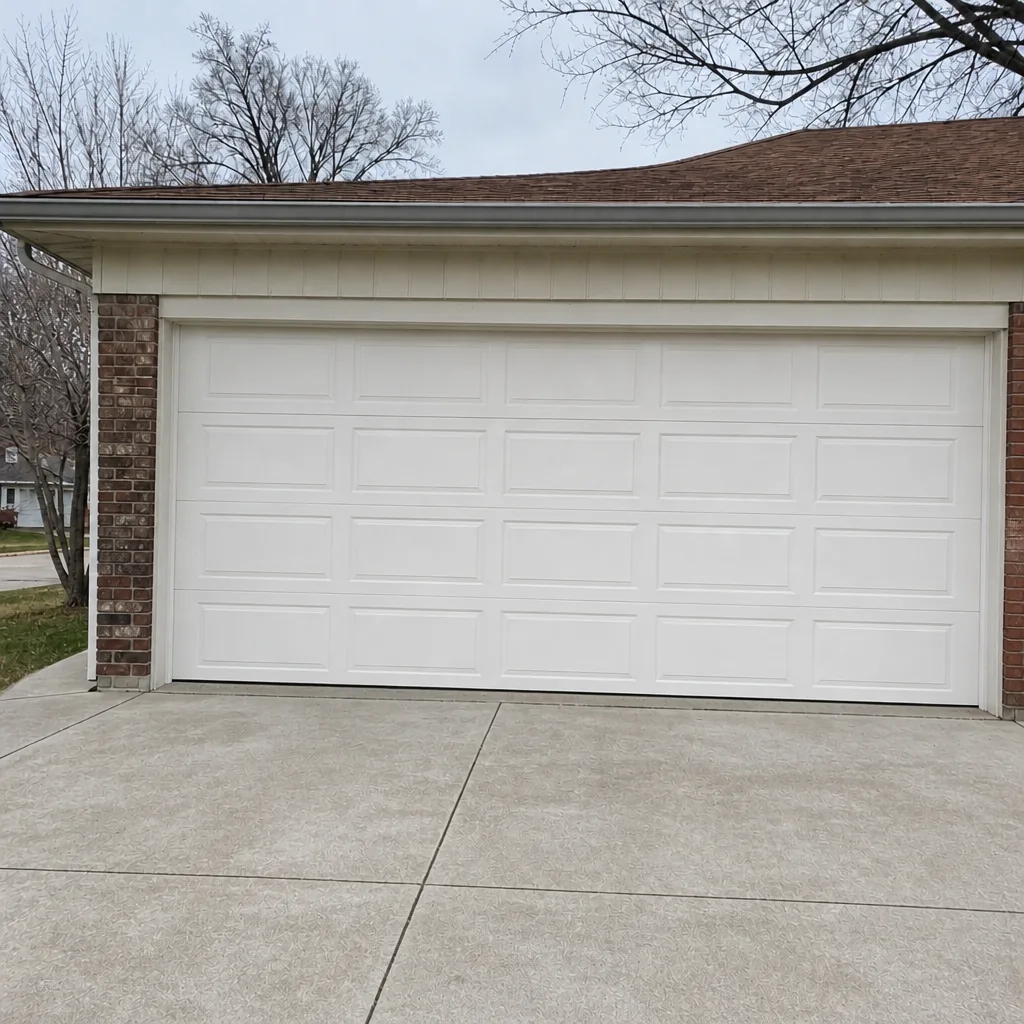
See the difference
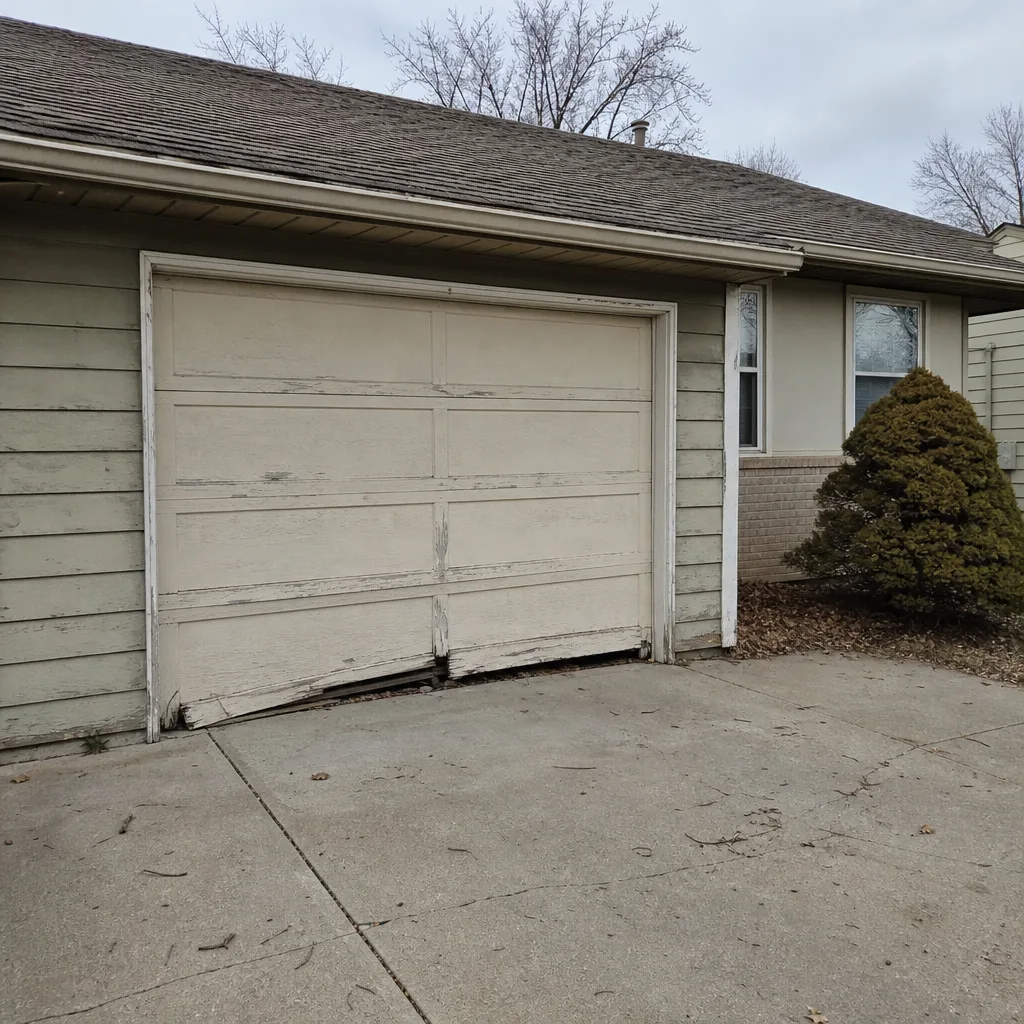 Before
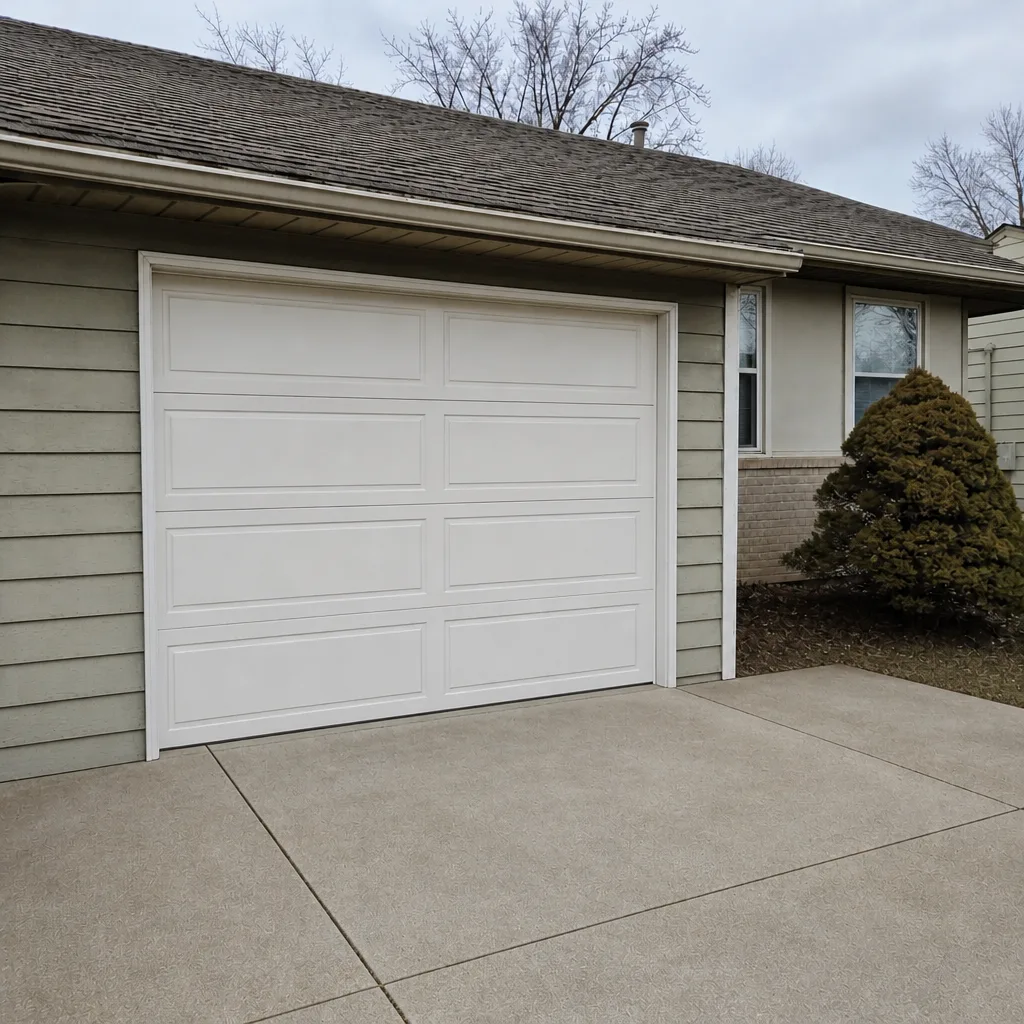 After
 Before
 After
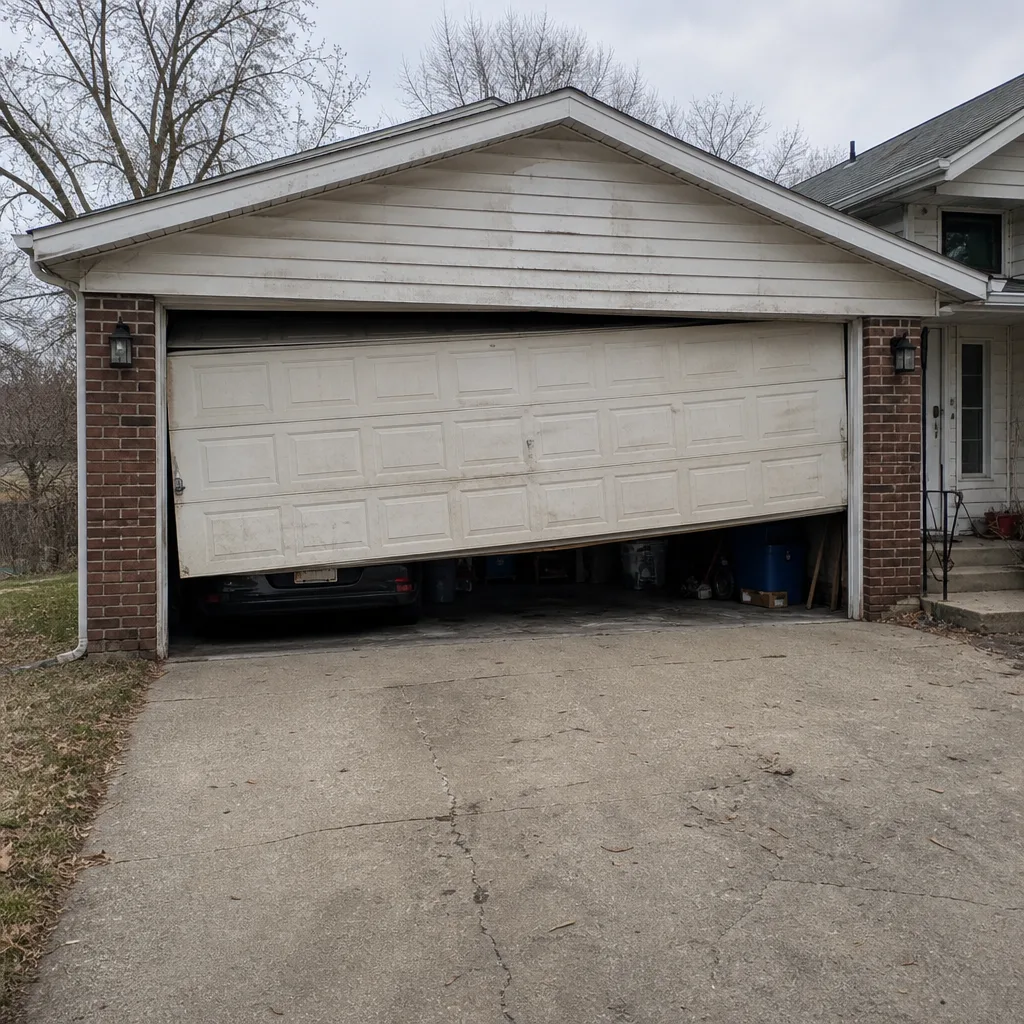 Before
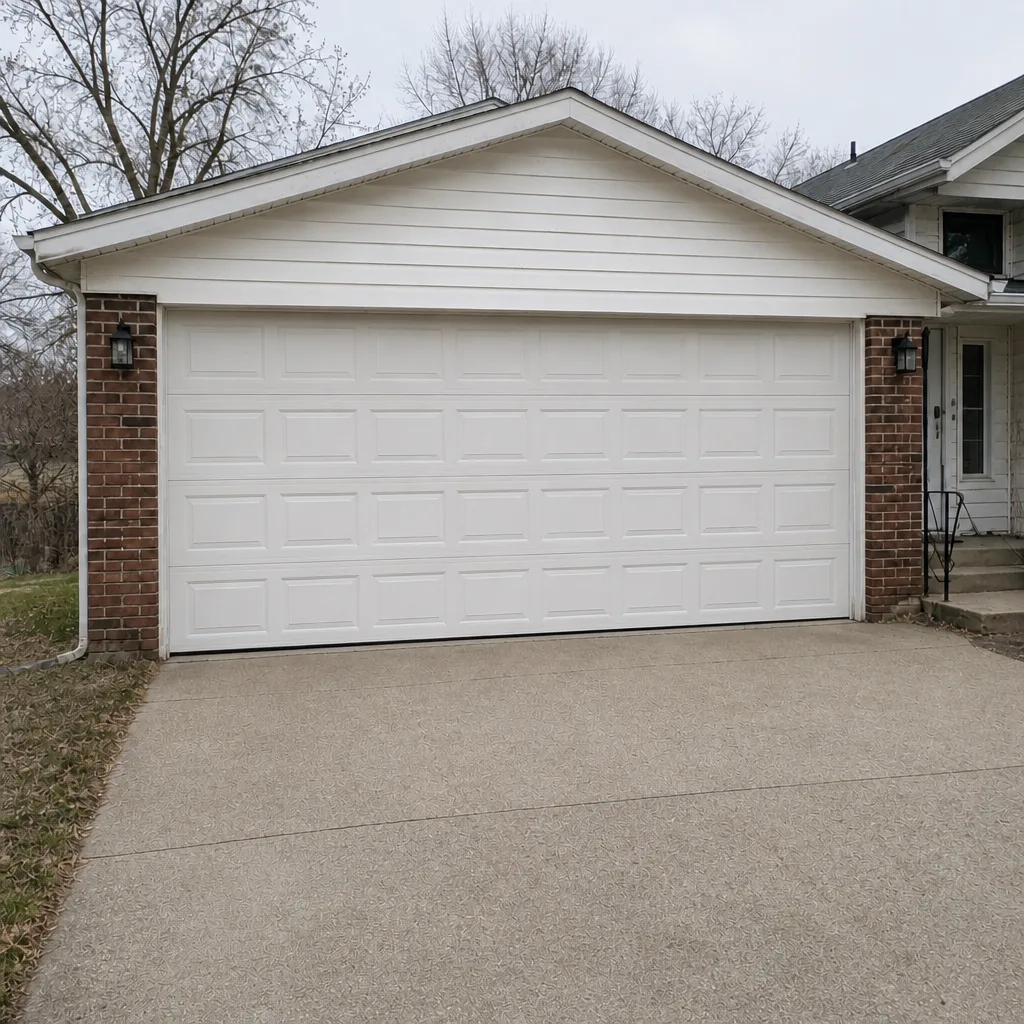 After
When to Call a Professional
Call Graystone Garage Door Repair when you see a visible gap in a torsion spring, a slack cable, a crooked door, a bent track section, or a bottom panel that has begun to buckle. Also call when a symptom is progressing over days and when an opener hesitates or reverses on a clean path. For anything involving spring or cable tension, we mean it: don’t try it yourself. Those parts are under a load that can maim a person. A trained technician handles that hardware safely, and the door gets fixed on the first visit rather than the second. Diagnosed correctly the first time is how we approach every Kansas City door. We offer free estimates in Kansas City. Call (855) 525-9808. We answer 24/7. Fast dispatch from 7am to 7pm, Sunday through Friday. We’re closed Saturday.
Frequently Asked Questions
The earliest reliable signs are a new noise (squealing, grinding, rattling, or banging) that wasn’t there a month ago, a door that reverses before reaching the floor, and visible rust starting on a torsion spring. Any of those three deserves a look before the door cycles many more times. Call (855) 525-9808 for an estimate.
It depends on where the grinding is. Grinding through the entire cycle usually means a worn roller or a pinching track, which can be scheduled. Grinding only in the last few inches often means a cable is rubbing on a drum, which should be checked the same day. Call (855) 525-9808 and describe exactly where you hear it.
The clearest sign is a visible gap in the torsion spring, meaning the spring has snapped; the door will usually feel extremely heavy or not lift at all. Rust spotting concentrated on the spring seat also points to a weakened spring. Do not try to lift the door by hand or cycle the opener on a snapped spring. Call us at (855) 525-9808 before you touch the door.
The door usually isn’t fine; it’s binding somewhere the eye can’t see. A dry roller, a slightly bent track, or a torsion spring that’s lost tension will stall a good opener every time. Before you replace the opener, have a technician cycle the door on its own. That single test answers the question.
Track the symptom over a few days. If it’s identical every cycle, it’s stable and can be scheduled. If it’s louder, longer, or more frequent, it’s progressing and needs attention today. Write down what you’re hearing each time you cycle the door, and bring that note to the appointment.
Yes, in most cases. Graystone works on both the door hardware and the opener, and handles the opener brands you’re most likely to have (LiftMaster, Chamberlain, Genie, Craftsman, Raynor, and others) along with the door brands on the market. If both the mechanical door and the opener unit need attention, we’d rather handle them in a single scheduled visit. Call (855) 525-9808. Estimates are free.
The Bottom Line
Most garage doors telegraph their failures. The skill is knowing which warning to take seriously and which to log for a routine visit. Grinding throughout the cycle is a roller or track problem. Grinding at the top of travel or in the last few inches is a spring or cable issue and deserves a technician. Rust around the spring seat in Kansas City means salt spray is attacking the spring. Uneven gaps between panels mean a buckled section that gets more expensive every week it’s ignored. Intermittent symptoms schedule. Progressing symptoms call. And anything involving a visible gap in a spring or slack cable means stop using the door. Graystone Garage Door Repair is a Kansas City specialist that has been working on doors here since 2011. We work on what you already have. Whether the door on your garage is a Clopay or an Amarr, whether the opener is a LiftMaster or a Chamberlain, every visit is diagnostic, not guesswork. Solid work. No surprises.
Contact Graystone Garage Door Repair
Not sure whether that noise is routine or the start of a bigger problem? Call Graystone Garage Door Repair at (855) 525-9808 for a free estimate. We answer 24/7. Fast dispatch from 7am to 7pm, Sunday through Friday. We’re closed Saturday. Garage doors are all we do, and we’re glad to walk you through what you’re hearing before anyone shows up.
Written by the team at Graystone Garage Door Repair, serving Kansas City since 2011.