
Last updated November 14, 2026
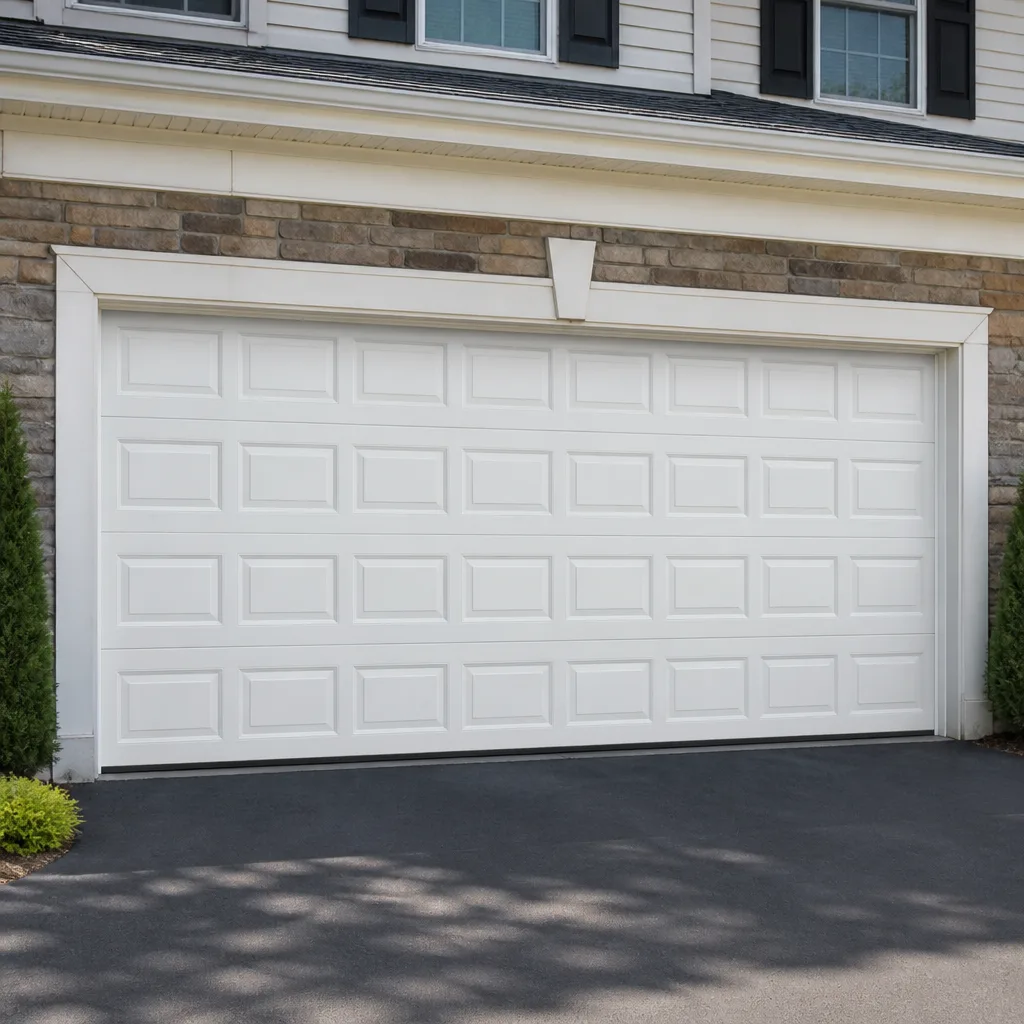 Raised-panel steel
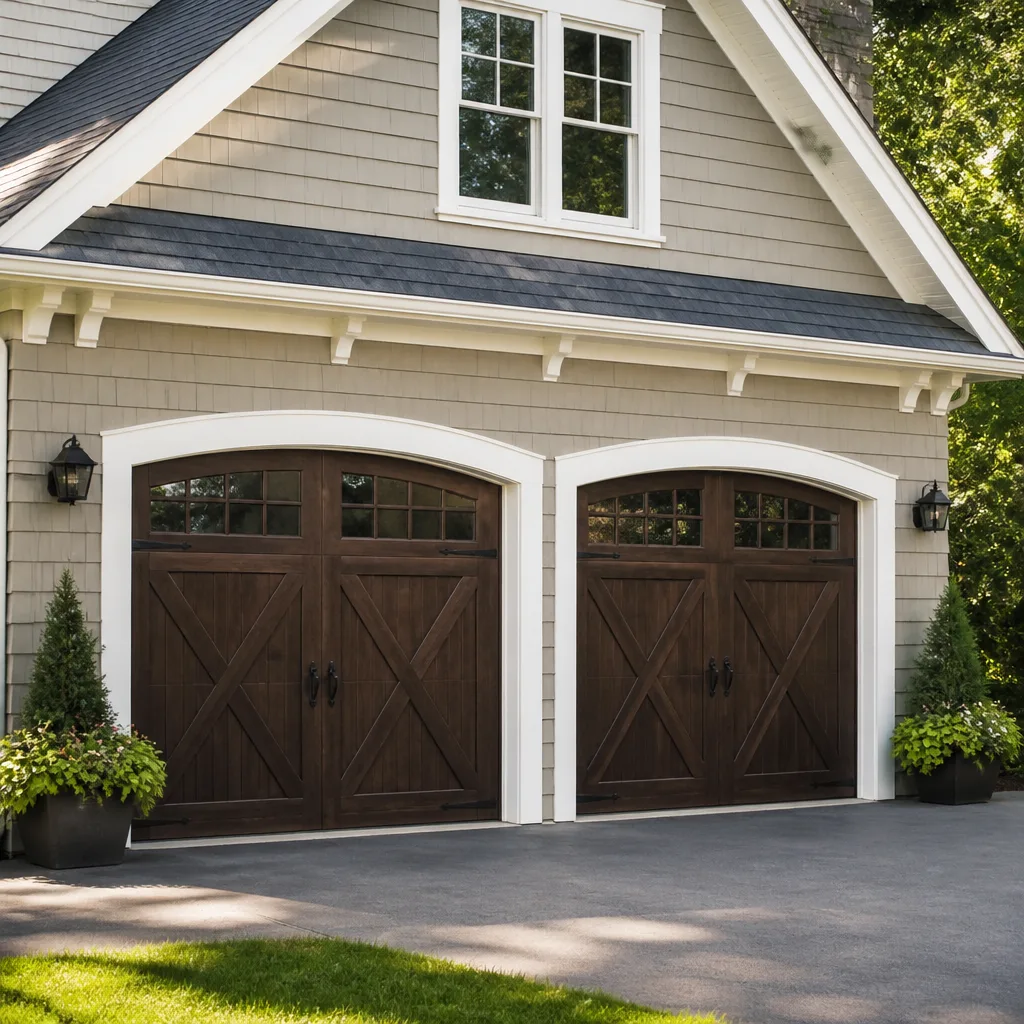 Carriage house
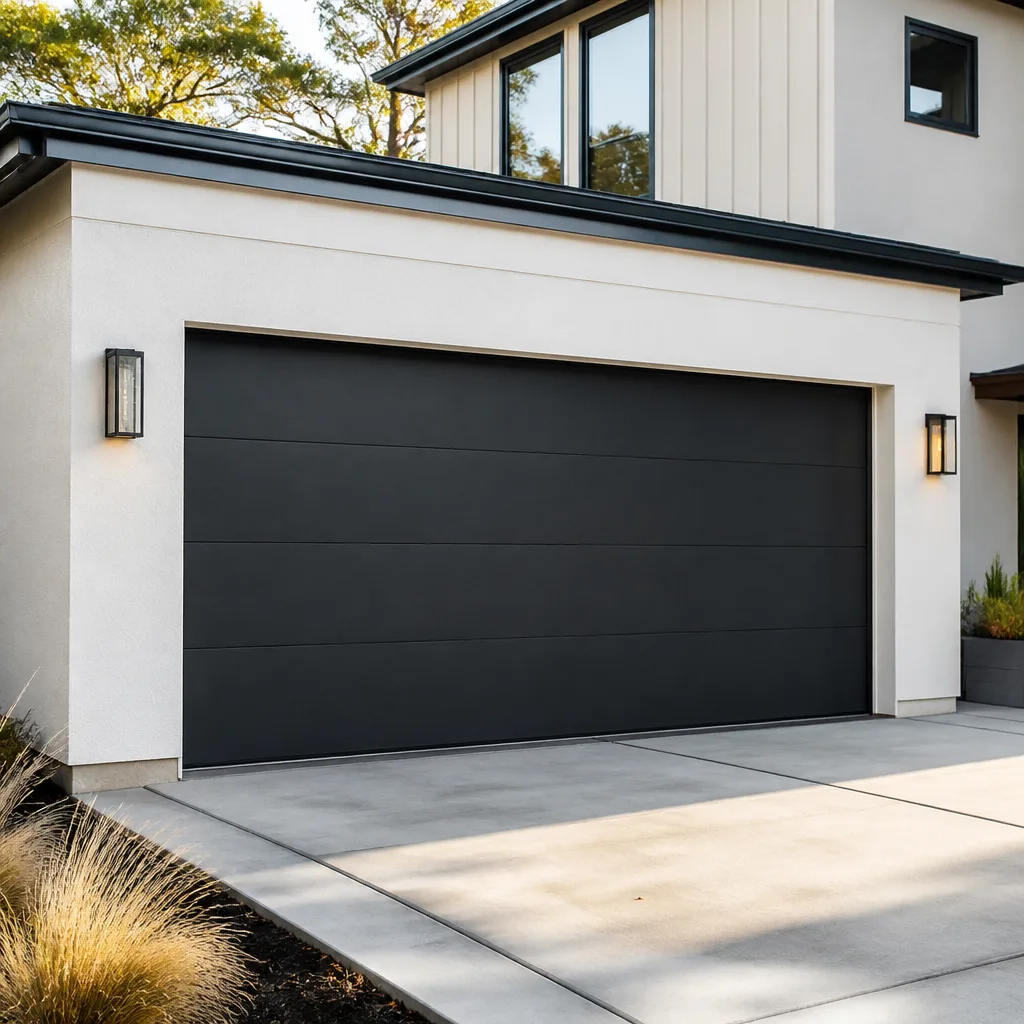 Modern flush
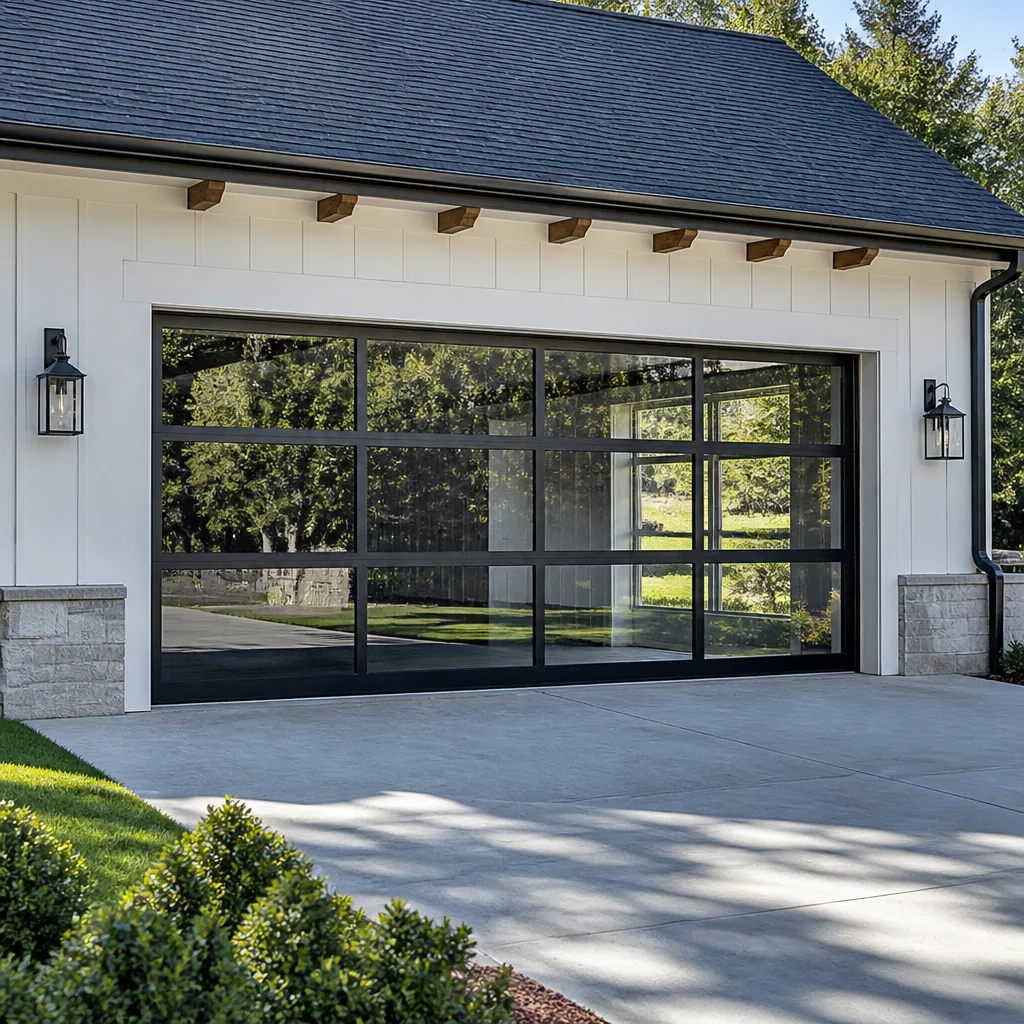 Full-view glass
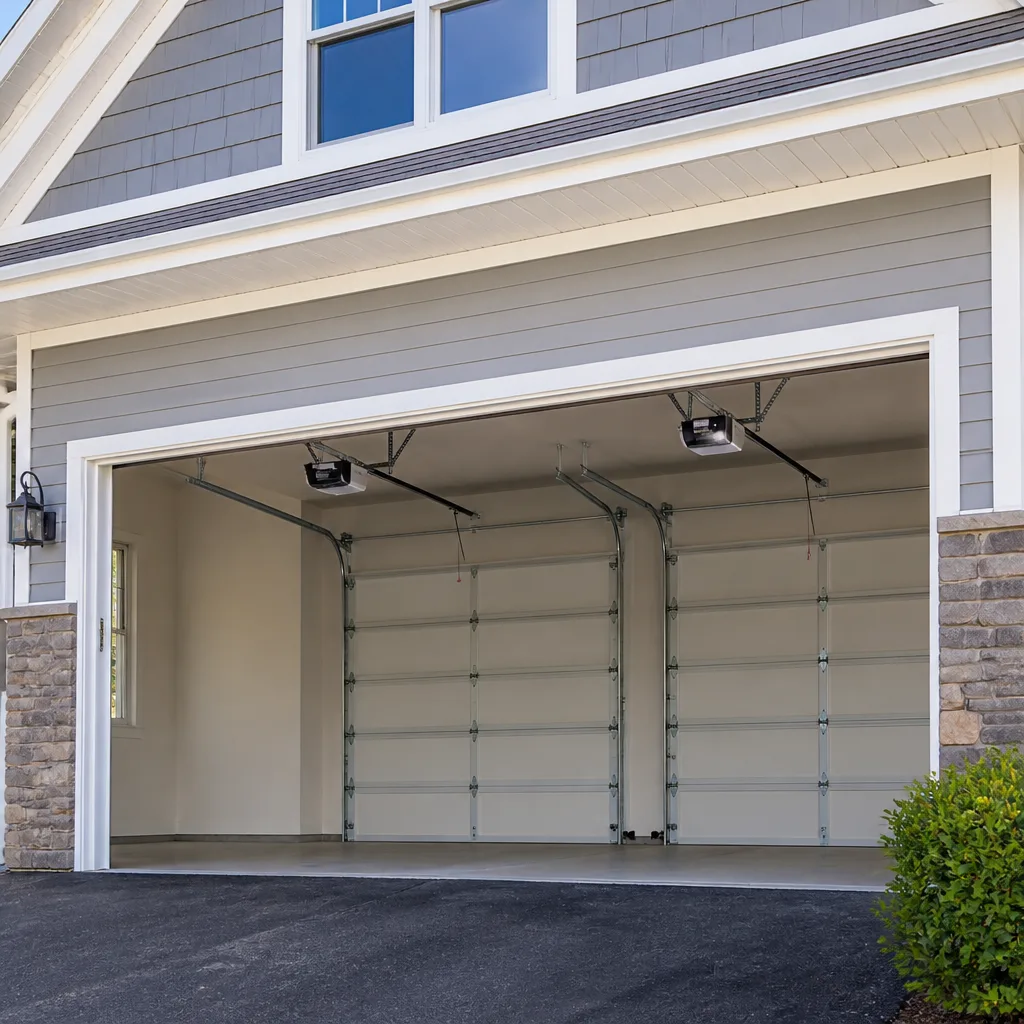 LiftMaster openers
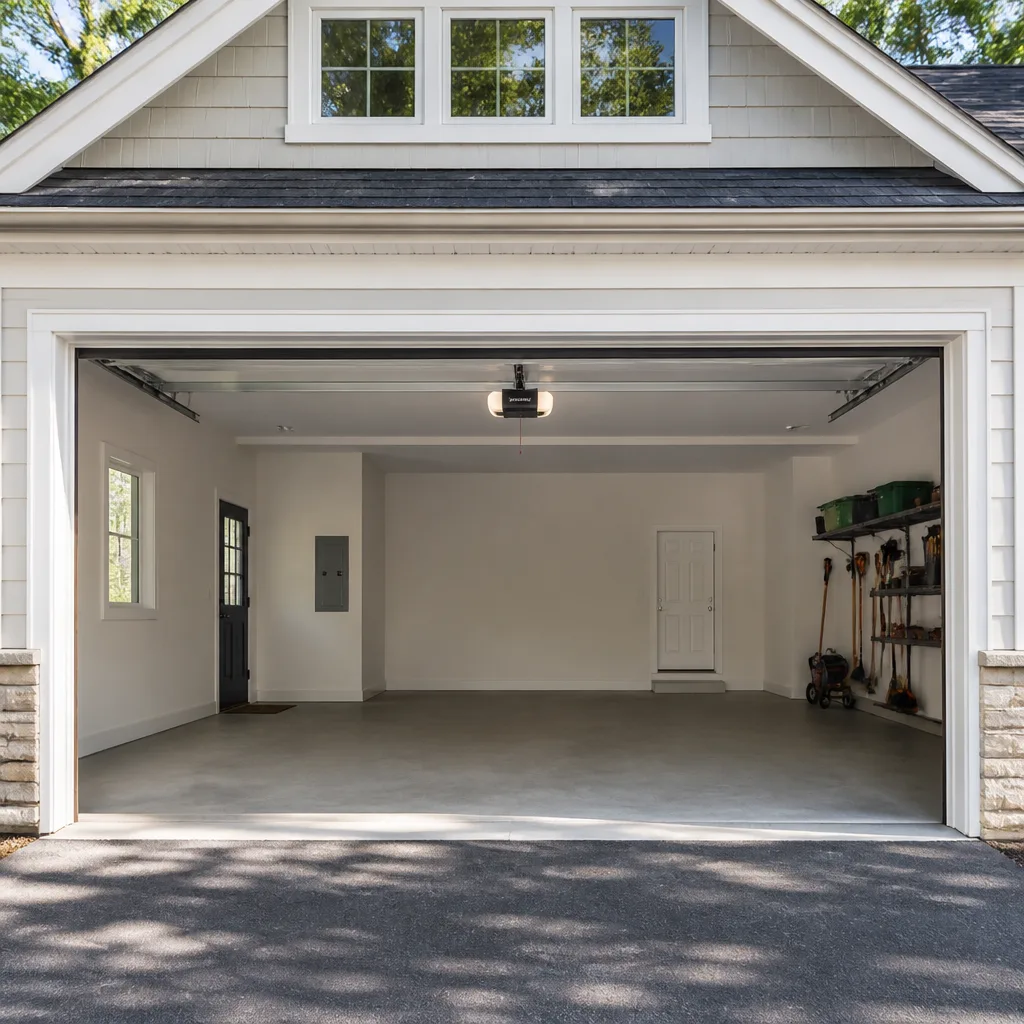 Chamberlain openers
Full 25-point door and opener safety check with every visit - springs, cables, rollers, tracks, and your LiftMaster or Chamberlain opener included
You get a price before we start. It does not change when the truck arrives.
Get your free estimateGarage Door Repair Troubleshooting in Kansas City: Common Problems and How to Fix Them
A garage door that reverses before closing isn’t “broken” – it’s telling you something specific. If you adjust the wrong setting first, you’ll waste an afternoon and possibly disable a safety feature that keeps your family safe. The same goes for a door that groans, drifts, or opens halfway and stops: the symptom you notice is rarely the part that failed. This guide teaches you to read your door the way a technician does, working backward from the failure to the root cause. You’ll learn what’s safe to check yourself, what to leave alone, and how Kansas City’s climate changes the picture.
Quick Answer
Most garage door problems fall into three systems: the mechanical door (springs, cables, rollers, tracks), the opener and its logic board, and the safety sensors. Diagnose by matching your symptom to the system – noise usually means springs or rollers, reversal usually means sensors or limit switches, slow operation usually means the motor or door tension. Lubrication, sensor alignment, and the manual release are safe for homeowners to handle. Spring replacement and cable work require a trained technician. Call (855) 525-9808 and we’ll help you sort out what you’re hearing.
Styles & brands we work with
- Raised-panel steel
- Carriage house
- Modern flush
- Full-view glass
- LiftMaster openers
- Chamberlain openers
Table of Contents
- Read Your Door Like a Specialist: Symptom to System
- How Kansas City’s Climate Affects Your Garage Door
- Why Is My Garage Door So Noisy?
- Why Does My Garage Door Reverse Before Closing?
- Why Is My Garage Door Opening Slowly or Unevenly?
- Opener Troubleshooting: Blinking Lights and Dead Remotes
- What You Can Fix Yourself vs. What Needs a Technician
- The Pre-Call Checklist: Run This Before You Dial
Read Your Door Like a Specialist: Symptom to System
Here’s the framework our technicians run through mentally before we ever pick up a tool. Every garage door failure traces back to one of three systems, and the symptom almost always points to which one. Learn this and you’ll skip the guessing games most homeowners spend a weekend on.
Start with the sound. A single loud bang from above the door, followed by a door that won’t lift, points to the torsion spring. A grinding or squealing that builds over weeks points to rollers, hinges, or a dry track. A rhythmic clunk points to a loose panel or a roller that’s come out of its bracket. Sound is the most reliable early indicator, and it’s the detail we ask about first on the phone.
Next, watch the movement. A door that travels a foot then reverses is looking for a sensor confirmation it isn’t getting. A door that lifts partway and stops cold is usually fighting weight – a failing spring or a door that’s come off its track. A door that moves at half its normal speed has a motor or tension problem. The timing of the failure tells you which.
- Loud bang, door won’t lift: torsion spring or cable failure
- Grinding or squealing: worn rollers, dry hinges, debris in the track
- Reverses before closing: safety sensor obstruction or misalignment
- Reverses partway open: travel limit switch setting, or binding in the track
- Runs but door doesn’t move: opener gear, drive belt, or manual release engaged by mistake
- Slow to open or close: motor strain, cold-weather lubricant thickening, or door tension
- Remote works sometimes: battery, signal interference, or a failing logic board
Write down what you observed before you call. Even a single sentence – “groans when opening and stops about halfway up” – saves a diagnostic step. The more precisely you describe the symptom, the more precisely we can diagnose it on the first visit. That’s the whole point of the framework: Graystone Garage Door Repair technicians diagnose by knowledge, not by trial and error.
How Kansas City’s Climate Affects Your Garage Door
Kansas City sits in a climate that swings hard. Winters here can drop to around -5°F, and summers regularly push past 100°F. That’s a range of over 100 degrees across the year, and it hits the two parts of your garage door that are most sensitive to temperature: the torsion springs and the lubricant.
Springs are steel under constant tension. In cold, steel contracts and gets more brittle. A spring that was holding fine in October may fail on the first hard freeze of January, especially if it’s already near the end of its cycle life. The sound is unmistakable: a sharp bang that most homeowners hear from inside the house. Warm weather is easier on springs but harder on lubricant – grease thins out in summer and can drip off hinges and rollers, leaving metal on metal. Then cold comes back and thickens what’s left, so the door drags and strains the opener.
This cycle is why we suggest seasonal lubrication as a real maintenance habit here, not an optional one. Once in late fall, before the first hard freeze, and once in early summer, so the door isn’t fighting a dry hinge through a July heat wave. The springs themselves you can’t service – they’re under tension a homeowner shouldn’t touch – but keeping everything else lubricated takes strain off them and off the opener.
There’s also a subtler effect. Kansas City homes tend to have garages that aren’t fully insulated – attached and detached alike – which means interior temperatures swing nearly as wide as outdoor ones. If you’ve noticed your door gets noticeably harder to lift in January than in May, that’s not your imagination. It’s thermal contraction and stiff grease working together. Address both and the door gets easier to live with.
If you’re in the market for replacement rather than repair, the climate is worth factoring into the choice. Insulated doors handle the temperature swing better than uninsulated panels. That’s a conversation we’re glad to have, and it’s covered in more detail on our Kansas City service page.
Why Is My Garage Door So Noisy?
Noise is the most common complaint we get, and it’s also the easiest to diagnose over the phone. Ninety percent of the time, the answer is either dry moving parts or worn rollers, and both are straightforward fixes. Here’s how to narrow it down.
Listen for the character of the sound. Squealing means metal is sliding against metal with no lubrication – hinges, rollers, or the opener’s chain. Grinding means something is loose or worn – a roller has come out of its bracket, or the track has a burr. Rattling or clunking means a loose panel or a hinge that’s working its way free. Each sound has a different answer.
- Check the rollers first. Steel rollers get noisy as they wear; nylon rollers stay quieter longer. Look for flat spots or cracks. If they’re steel and worn, replacement is a genuine upgrade.
- Lubricate the hinges and rollers. A dedicated garage door lubricant – not WD-40, which is a solvent not a lubricant – at each hinge pivot and each roller stem. Two or three passes a year in this climate.
- Check the track for alignment. Run your hand along the inside of the vertical track with the door closed. If you feel a dent or a kink, the roller is fighting it on every cycle. Call a technician for track work; bending it back can make the problem worse.
- Inspect the opener drive. A chain-drive opener that rattles is usually a loose chain. A belt-drive that squeals has a dry belt or a worn idler pulley. Tightening or replacing the belt is a technician job.
- Don’t overlook the springs. A torsion spring that’s starting to fail will make a creaking sound before it breaks. If you hear creaking, stop using the door and call.
Once your door is properly lubricated and rolling smoothly, an opener like a LiftMaster or a Chamberlain runs noticeably quieter – it’s transmitting less vibration through the frame. The quiet you want is often on the door, not the motor. If you already have a Genie or Raynor system and the noise persists after the basics, that’s when we start looking at the opener itself.
Why Does My Garage Door Reverse Before Closing?
This is the single most misdiagnosed problem in the trade. The door reverses because a safety system thinks something is in the way – not because the door “wants” to open. There are two systems involved, and they behave differently. Get that straight and you’ll solve this in minutes instead of hours.
The first is the photo-eye sensor at the base of the track. These are the two little lenses – one on each side of the door – that usually sit about six inches off the ground. When the invisible beam is broken, the door reverses immediately on the way down, or refuses to close at all. Nine times out of ten, the answer is a misaligned sensor, dust or cobwebs on the lens, or an object in the beam. If you’ve ever had a bicycle or a trash can nudge one sideways, you already know what this feels like.
- Look at the LED on each photo-eye. They should both be lit steady – usually green or amber. A blinking or dark LED on either one tells you the alignment is off.
- Wipe the lens with a soft cloth. In Kansas City, cottonwood fluff and general dust quicken the buildup, especially in late spring. Something as simple as a spider web can break the beam.
- Loosen the wing nut on the sensor bracket slightly and nudge the sensor until both LEDs are steady, then tighten the bracket.
- Test the safety reverse: close the door, then pass a broom handle through the beam. If the door doesn’t reverse, the sensor system needs a technician.
The second system is the opener’s travel limit switch, which tells the motor where the door’s “fully closed” position is. When the door reverses partway down without anything in the beam, the limit switch is usually the culprit. This is a setting on the opener head, and depending on the brand, it’s either a set of dials or a set of up and down arrow buttons. Adjusting it sounds easy, and sometimes it is – but if you’re a few turns off, the door can close too hard, or stop short of the ground and leave a gap. That’s the moment a homeowner often disables the safety feature to “make it work,” which is the wrong answer entirely.
The better move: leave the limit switch to a trained technician. That’s true across brands. A Chamberlain that reverses on closing isn’t fixed the same way a Raynor does, and a LiftMaster programming sequence is different from a Genie’s. Knowing which is which is exactly why we work on what you already have instead of steering you toward a new unit.
Why Is My Garage Door Opening Slowly or Unevenly?
Slow operation almost always points to the motor working harder than it should. The question is whether the motor itself is aging, or the door has gotten heavier. In our experience, it’s usually the door. Springs lose cycle life over years, and a wall-mounted opener doesn’t have the torque margin to compensate for a middle-aged spring.
The diagnostic test is simple. Pull the manual release cord to disconnect the door from the opener. Then lift the door by hand to about waist height and let go.
- If it stays put: the balance is good, and the issue is probably the opener motor.
- If it wants to close on its own: the springs are weak, and the door is fighting them.
- If it wants to open faster than you’d like: springs are too strong or the door was never balanced correctly.
- If it’s extremely heavy or won’t budge at all: stop immediately. Do not try to force it. There’s a spring or cable problem and it’s a call-the-technician situation.
If the balance test comes out fine and the door still moves slowly, watch the opener head while the door runs. On a LiftMaster or a Chamberlain with a screw or chain drive, a slow turn with a strained sound is a motor problem. On a belt-drive Genie, a slipping belt is a common cause. On a Raynor, an older unit with worn internal gearing will wind down over time. These are all diagnosable by an opener repair specialist, and they’re often fixable without replacing the whole unit.
Uneven operation is a different, and more serious, matter. If one side of the door lifts before the other, or the door twists slightly as it rises, that’s a sign of a failing spring, a slack or frayed cable, or a bracket that’s come loose. Every time you run the door in that condition, the strain adds up. Stop using it. That’s not a “wait until things settle down” problem. Our garage door repair team handles those calls daily, and we’d rather you call early than after a cable snaps.
Opener Troubleshooting: Blinking Lights and Dead Remotes
Opener blinking codes are the tech’s version of a diagnostic readout. Most brands flash an LED on the back of the motor a specific number of times, wait, then repeat. The pattern tells you what the opener thinks is wrong. But the same number can mean different things on different brands, which is exactly where homeowners get stuck.
Here’s the part that trips people up: a Chamberlain blinking four times and a LiftMaster blinking four times aren’t necessarily telling you the same thing, even though the two brands share parent company DNA and many components. The diagnostic tables line up in some models and diverge in others. Beyond that, Genie and Raynor each have their own codes and their own meanings. What looks like the same symptom on paper can have a different root cause depending on what’s mounted to your ceiling. That’s why “look up the four-blink code online” gives you a different answer every time you search it.
What you can safely check on any opener:
- Remote not working: replace the battery first. Then try a wall button. If the wall button works and the remote doesn’t, the problem is the remote or its pairing. If neither works, it’s the logic board or the safety sensor.
- Opener works intermittently: look for signal interference. LED bulbs in the opener itself are a known culprit on some models. Swap to a standard bulb and retest.
- Opener hums but doesn’t move the door: the gear or drive is stripped. That’s a technician job, and on many brands the gear kit is replaceable.
- Opener completely dead: check the outlet. Then check for a wall switch that’s been flipped off. Then check the breaker. Then call us.
- Smart-connectivity dropped: Wi-Fi openers lose their network connection for the same reasons any device does. Re-pairing through the manufacturer’s app is usually the fix.
For the codes themselves, let a trained eye read them. Our garage door opener repair service is treated as a standalone specialty, not an afterthought, precisely because the diagnostic work on modern openers has become its own discipline. Whether you have a LiftMaster with MyQ, a Chamberlain with a battery backup, or a Genie with a legacy wall console, the code means what the manufacturer’s table says it means – and matching that to your specific model is the fastest path to the fix.
What You Can Fix Yourself vs. What Needs a Technician
We like homeowners who want to understand their door. There’s a genuine line between a fix you can safely complete and one you shouldn’t touch, and it’s worth drawing clearly.
Safe for homeowners
- Lubrication. Hinges, rollers, and the opener chain or belt. Twice a year in this climate. Use a garage door lubricant, not general-purpose oil.
- Photo-eye sensor alignment. Clean the lenses, nudge them until the LEDs are steady, tighten the wing nut.
- Manual release. Pull the red cord when the door is closed to disconnect the opener. Reconnect by lifting the door until it clicks back onto the carriage.
- Remote battery replacement, and re-pairing a remote. The manufacturer’s manual walks you through it.
- Track debris and visual inspection. Look for kinks, dents, or anything in the track. Don’t try to fix a bent track – call instead.
- Wall-switch and breaker checks. Simple electrical checks on the outlet and breaker are fine.
Needs a trained technician
- Torsion and extension spring replacement. Springs are under extreme tension. A torsion spring that lets go while you’re working on it can cause serious injury. This is the hard safety line.
- Cable work of any kind. Cables carry the door’s full weight. A snapped or frayed cable can whip, and the answer is not “tape it up until we save up.”
- Track straightening or replacement. A misaligned track can drop the door from the open position.
- Panel replacement. It sounds structural, and it is. Replacing a panel means balancing the door afterward.
- Opener gear, logic board, or motor work. Inside the opener head, everything is specific to the brand and model.
- Hinge and bracket replacement on the top section. Anything above waist height that’s under tension, particularly the top brackets, deserves a trained hand.
The line runs where stored tension exists. If a part is relaxed and accessible, you can almost always work on it. If it’s holding the door’s weight or pulling against a spring, that’s a professional call. We won’t give you DIY instructions for those – we’d be doing you a disservice.
The Pre-Call Checklist: Run This Before You Dial
This is the checklist we’d hand you if you called us. Run through it before you dial. You don’t need to be perfect; you just need to arrive at the conversation with the right information so we can dispatch the right technician with the right parts.
- The door is fully closed and won’t open. Look at the springs above the door (with the door closed). Do you see a visible gap in one of them? If yes, it’s a broken spring. Call us. If the springs look intact, check the manual release cord – it may have been pulled accidentally.
- The door reverses before closing. Are both photo-eye LEDs steady? If one is dark or blinking, clean and align it. If both are steady and the door still reverses, the limit switch is the likely culprit. Call us.
- The door makes a loud bang and stops. Do not press the button again. A broken spring or a snapped cable can damage the door further each time the opener tries to lift the door. Call us immediately.
- The door opens unevenly or twists. Stop using it. This is a spring or cable issue and it’s a same-day call.
- The door is noisy but works. Lubricate hinges and rollers, then retest. If noise persists, we’ll take a look at rollers and track alignment.
- The opener hums but the door doesn’t move. Check the manual release. Then check whether the opener’s light is on. If the opener is clearly powered but not driving, the gear is the likely cause. Call us.
- The opener runs but a remote doesn’t work. Try the wall button. If that works, replace the remote battery and re-pair. If it still won’t work, call us – the pairing or the receiver board is at fault.
- The door only opens partway and stops. Look for an obstruction in the track. If clean, the travel limit switch is the likely cause. Call us.
- The door has done nothing and the opener is silent. Wall switch, outlet, breaker – in that order. If all check out, call us.
- Anything else unusual. Take a picture of the door and the opener head before calling. It’s worth a thousand words.
With that checklist in hand, your call is short and specific. We know what to bring, which brand’s diagnostics to run, and how long we’ll likely need. Call (855) 525-9808. We answer 24/7, with fast dispatch from 7am to 7pm, Sunday through Friday.
Common Mistakes to Avoid
- Spraying WD-40 on the track or hinges. WD-40 is a solvent, not a lubricant. It strips what little grease was there and leaves the metal dry. Use a garage door lubricant. Two clean passes a year beats ten of the wrong product.
- Disabling the photo-eye sensor to “make it close.” This defeats the one safety feature that stops the door when a child or a pet is under it. If a sensor won’t hold alignment after cleaning, get it fixed. There’s no workaround worth that trade.
- Adjusting the limit switch without knowing what you’re doing. A door set to close too hard can crush an object – including fingers – before it reverses. A door set to close too soft leaves a gap that lets in cold air and mice. Either way the fix is one diagnosis, not ten attempts.
- Trying to “loosen” a broken spring yourself. Stored energy in a torsion spring is no joke. This is the one mistake on the list that can land a homeowner in the ER. Call us. There’s no shortcut here worth your hands.
- Running the door with a snapped cable. Every press of the button makes the failure worse, and a whipping cable can damage panels or a car. Stop using the door on the first sign of trouble.
- Assuming the symptom is the problem. A reversing door isn’t “broken” – it’s telling you a sensor is misaligned or a limit switch is off. Diagnose the system, not the symptom. It’s the difference between a five-minute fix and a lost afternoon.
- Buying a new opener when the door is the real problem. In our experience, a slow-moving door often has an aging spring, not a dying motor. Test the balance first before you spend money on a motor that’s doing its best against a door it can’t lift.
- Ignoring a seasonal pattern. If the door gets harder to open every January and easier every June, that’s thermal contraction plus seasonally thick grease, not a dying opener. The fix is lubrication and a spring check, not a new motor.
See the difference
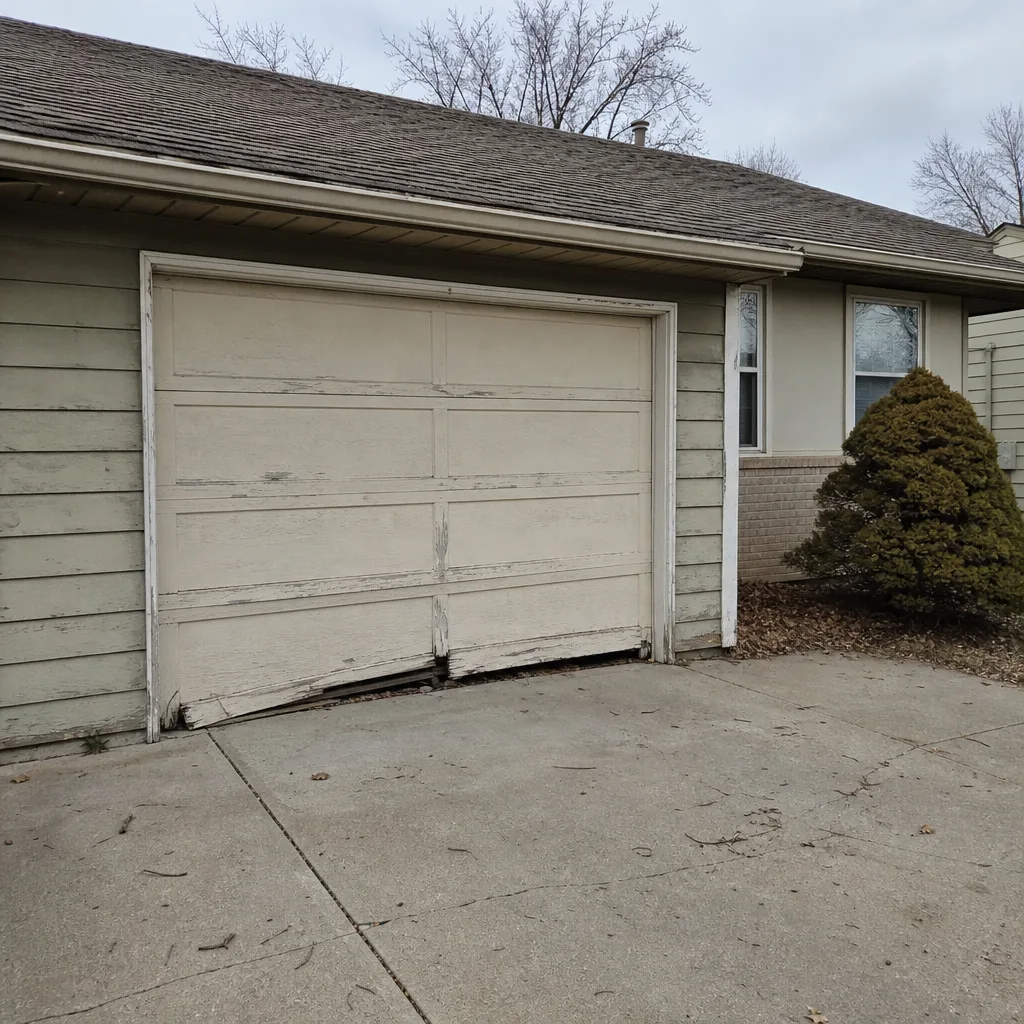 Before
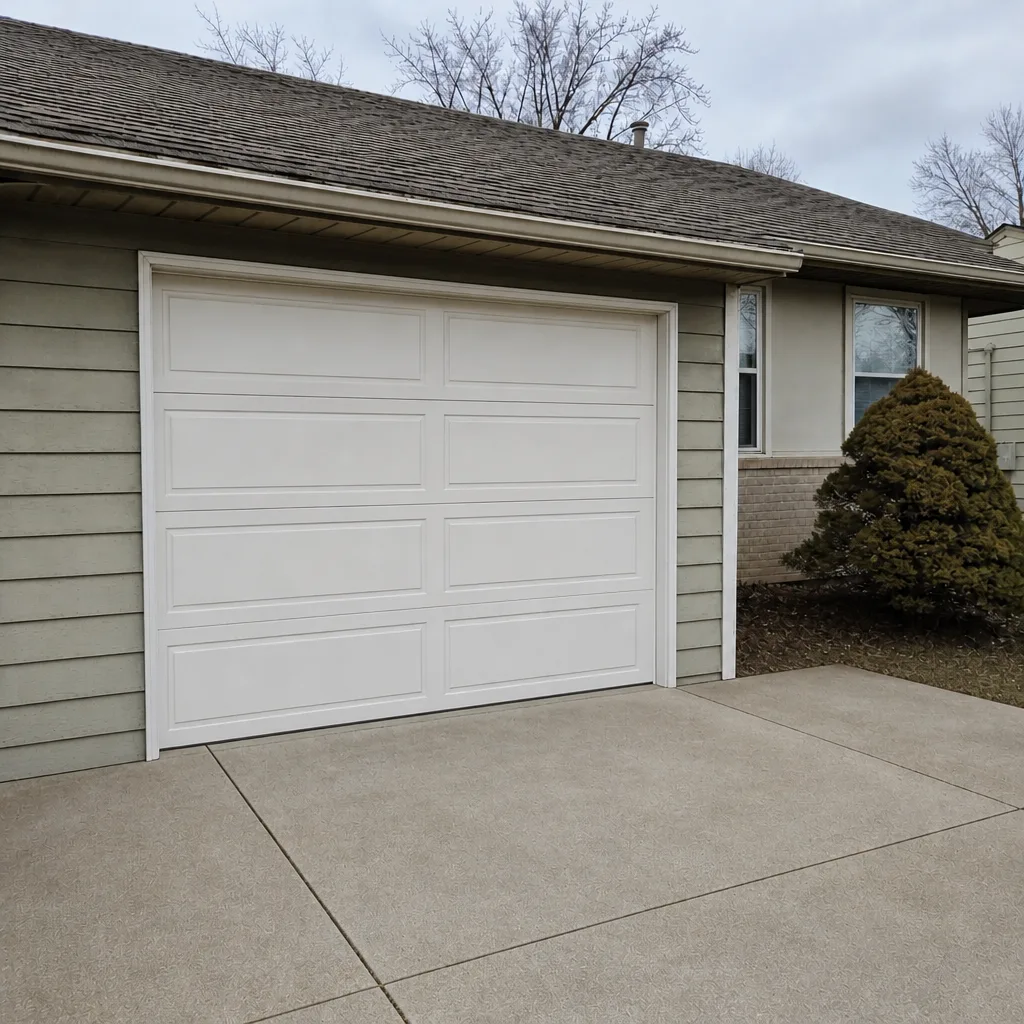 After
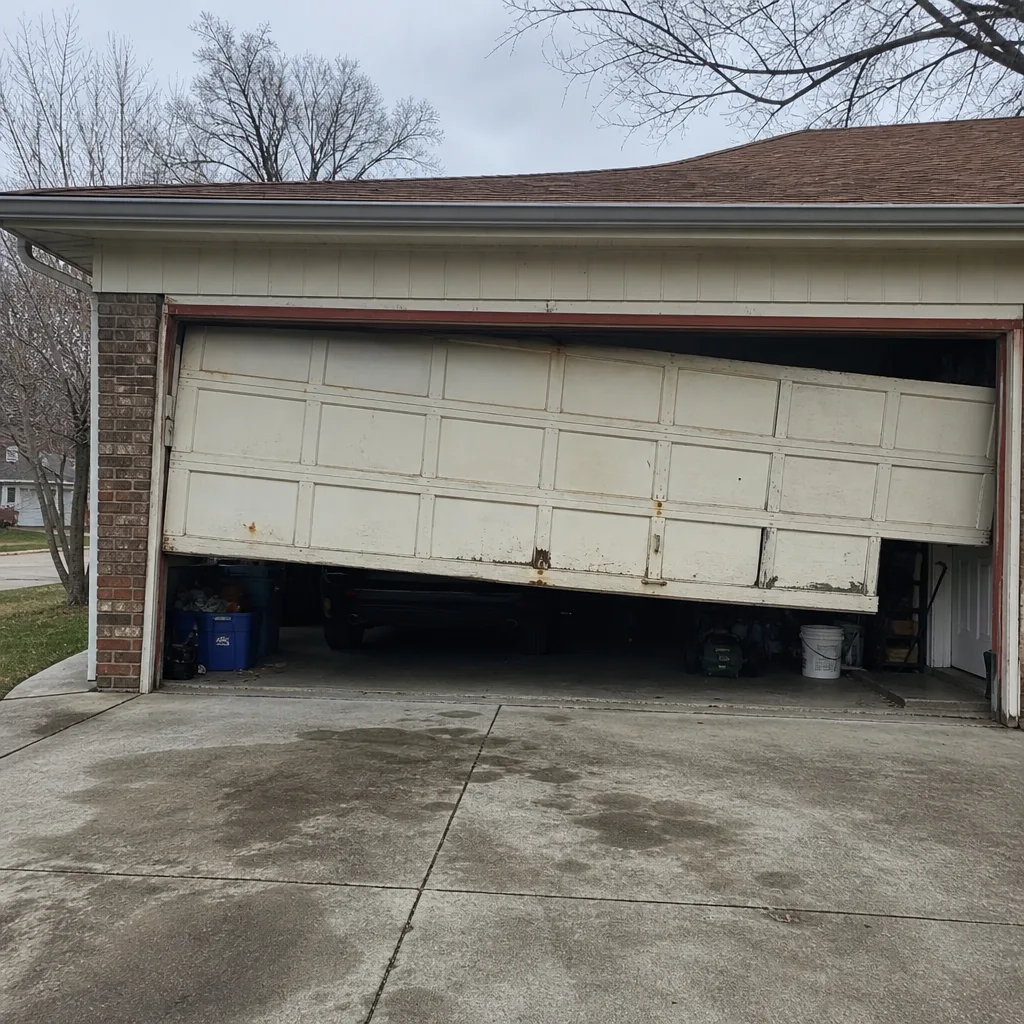 Before
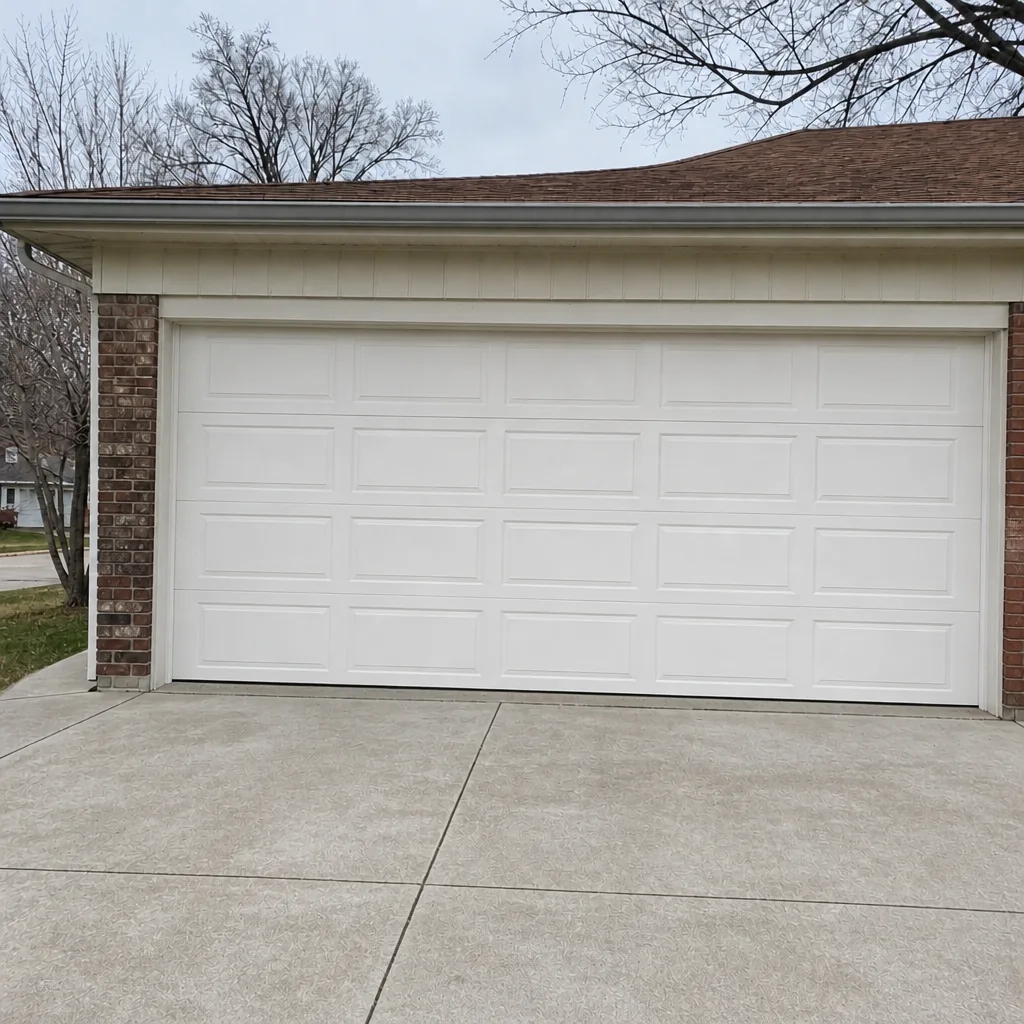 After
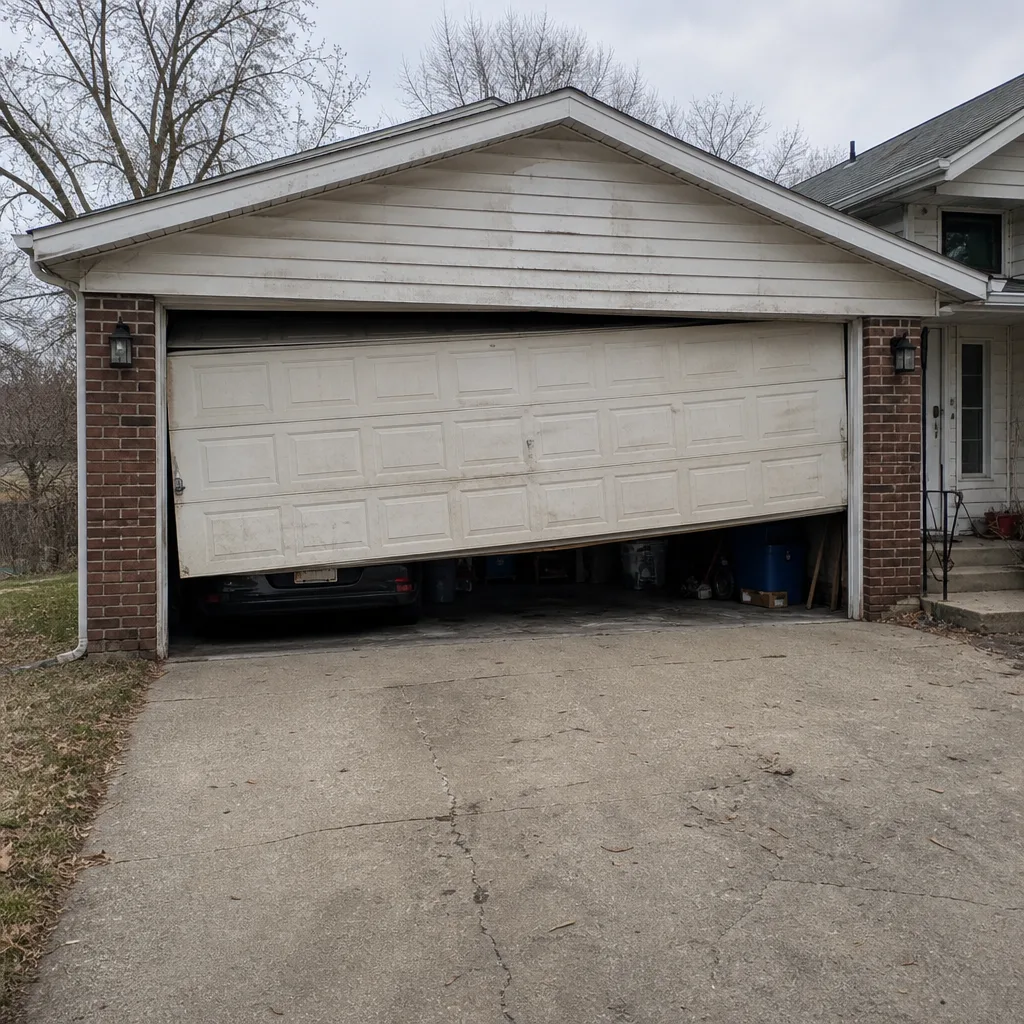 Before
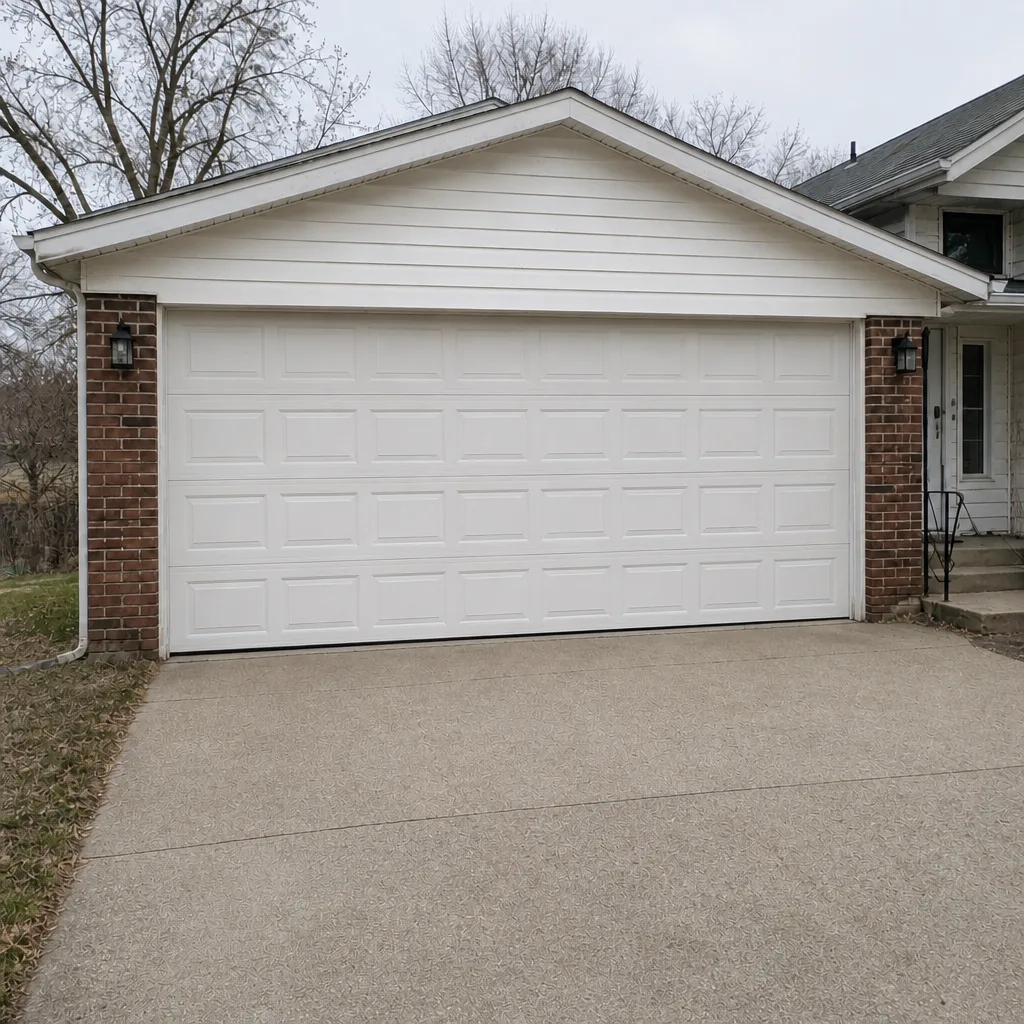 After
When to Call a Professional
Call a professional the moment the door stops being predictable. A door that reverses on its own, opens unevenly, or makes a loud bang you didn’t cause is a same-day call. A door that’s been noisy for a month without any real decline is worth an inspection but not a panic. Anything involving the springs, cables, or opener internals is a professional job. Full stop.
Here’s the practical rule: if the part you’re looking at holds the door’s weight, it’s a technician’s part. If it’s a moving part you could pick up with two fingers and drop without consequence, it’s yours to maintain.
Graystone Garage Door Repair offers free estimates in Kansas City – call (855) 525-9808. We answer 24/7, with fast dispatch from 7am to 7pm, Sunday through Friday. The written estimate sets the final price, agreed before we start. Garage doors are all we do – whether it’s a LiftMaster opener, a Chamberlain logic board, or a Raynor door that’s out of balance, we’ve seen the pattern before.
Frequently Asked Questions
Most repairs fall into a range you can plan for, but the exact figure depends on what failed. A simple sensor alignment or lubrication service is at the low end; a spring replacement or opener gear kit sits higher. We give a written estimate before any work starts, and the written estimate is the price. Call (855) 525-9808 for an exact quote – estimates are free.
Often, yes. Same-day service is available for repair calls in Kansas City, and spring or cable failures get priority because they’re safety issues. Call (855) 525-9808 and we’ll tell you the next opening. If it’s outside dispatch hours, we’ll book you into the next opening, Sunday through Friday, 7am to 7pm.
The safety sensor at the base of the track is almost always the cause. Clean both lenses, look for anything in the beam, and check that both LEDs are steady. If the door still reverses with a clear beam, the travel limit switch on the opener is the next suspect. That’s a technician adjustment. Call (855) 525-9808 for help sorting it out.
No. Torsion and extension springs are under extreme tension and can cause serious injury if they let go during the work. This is the one repair we won’t walk a homeowner through. Call a trained technician. The savings on a DIY spring job aren’t worth the risk.
The 4-blink code usually points to a safety sensor issue, but it doesn’t mean the same thing on every brand. A Chamberlain blinking 4 times has a related but not identical meaning, and the diagnostic table differs by model. The fastest fix is matching the code to your exact model. Call (855) 525-9808 and we’ll help you narrow it down.
Yes, and it should be fixed before the door is used again. A door off its track is a real safety risk and a structural strain on the opener. Don’t try to force it back on – that’s how panels get bent and doors get dropped. Call (855) 525-9808 and we’ll dispatch a technician with the right equipment.
The Bottom Line
Garage door problems aren’t mysteries – they’re signals. Loud bang means spring. Reverses before closing means sensor or limit switch. Slow or uneven means tension or opener motor. Kansas City’s temperature swings sharpen all of these, and a twice-yearly lubrication habit prevents a lot of them. The parts under tension belong to a technician; the accessible moving parts belong to you. When in doubt, describe the symptom, take a picture of the opener head, and call. If you get stuck, Graystone Garage Door Repair is a phone call away.
Call (855) 525-9808 for a free estimate. We answer 24/7, with fast dispatch from 7am to 7pm, Sunday through Friday. And when the diagnosis is in, we’re happy to walk you through it – because knowing what went wrong makes it easier to keep it from happening again.
Written by the team at Graystone Garage Door Repair, serving Kansas City since 2011.